Smoke, fire, Worldcon, cataract, writing…oh my!

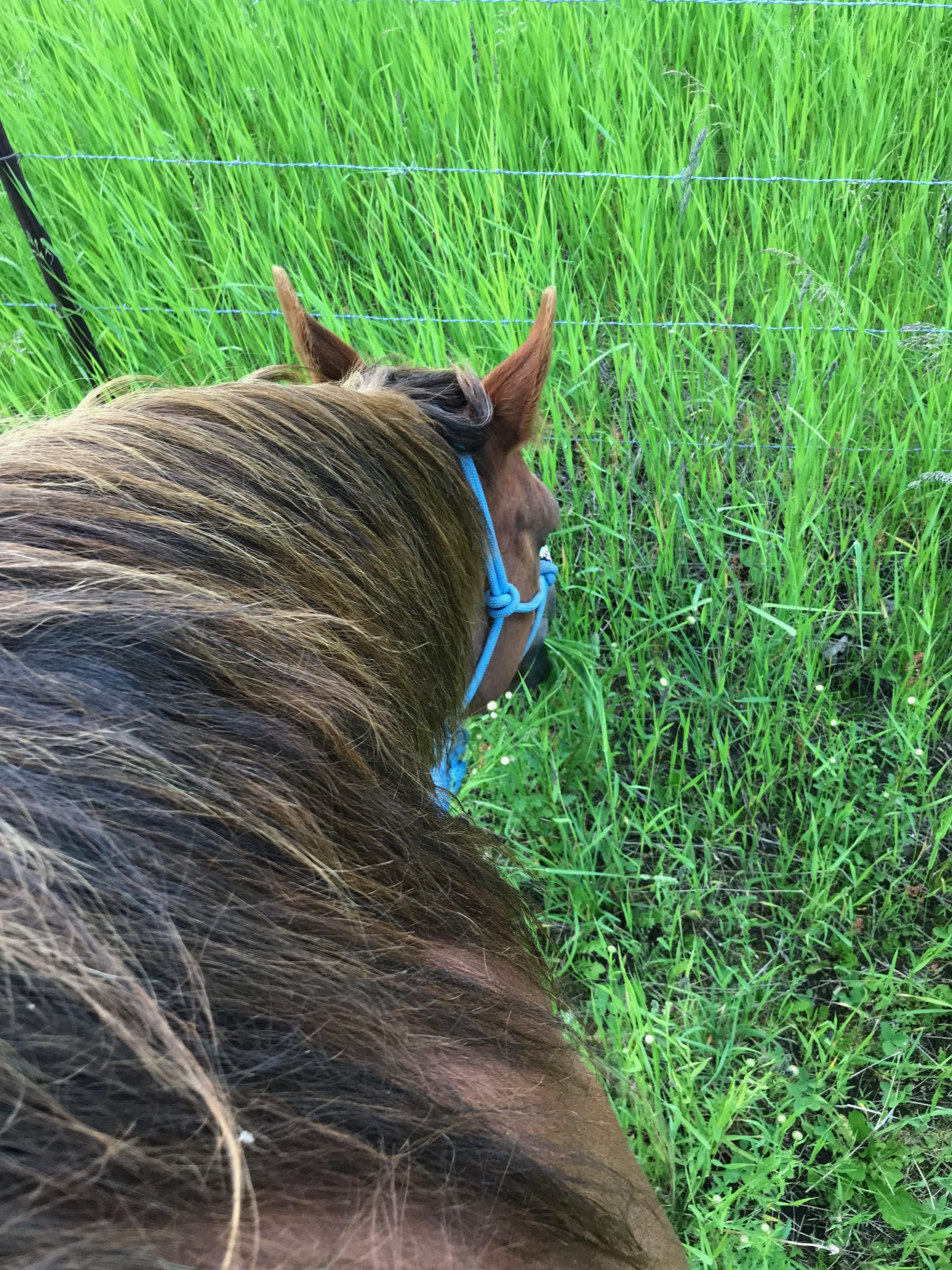
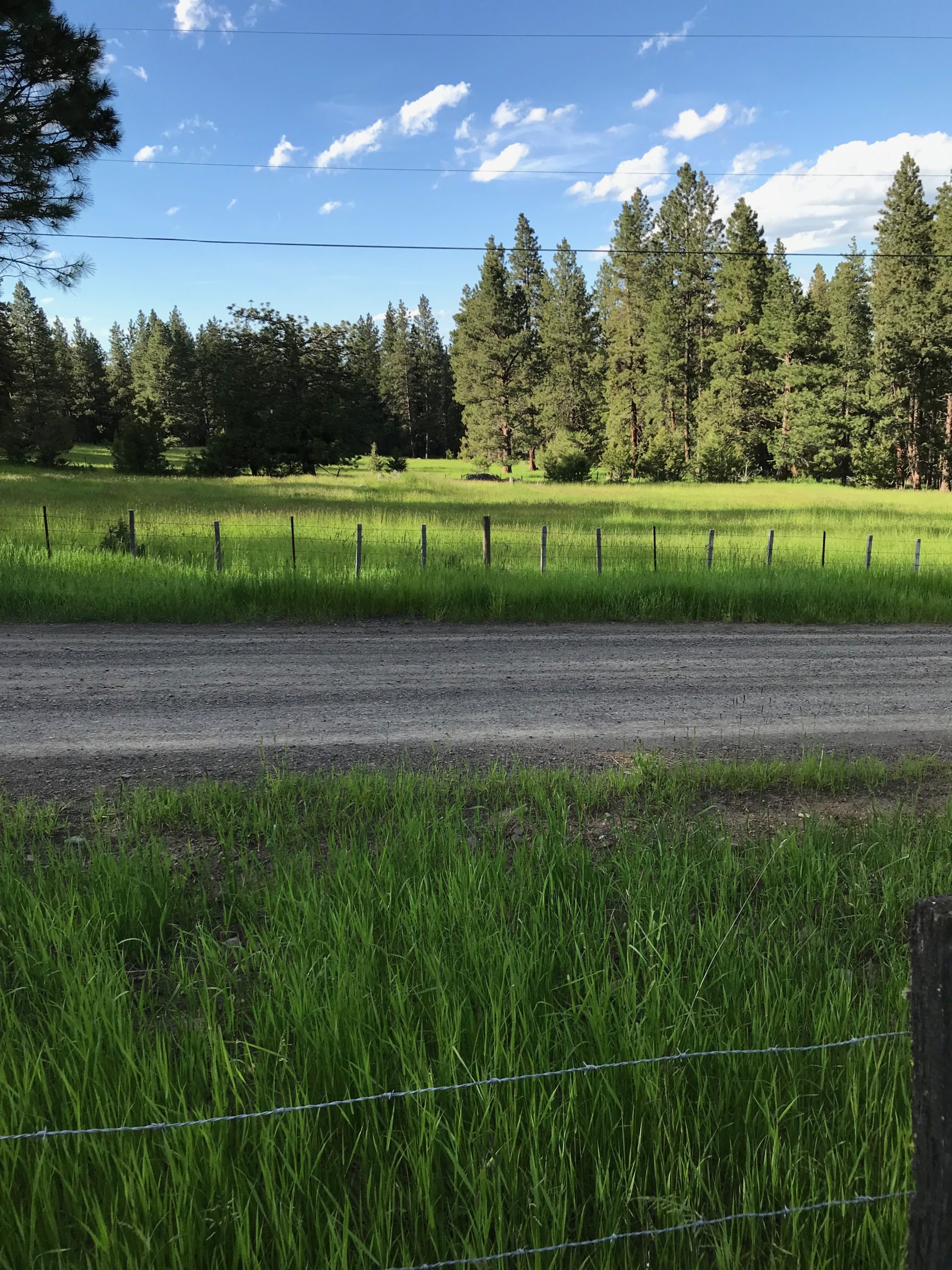
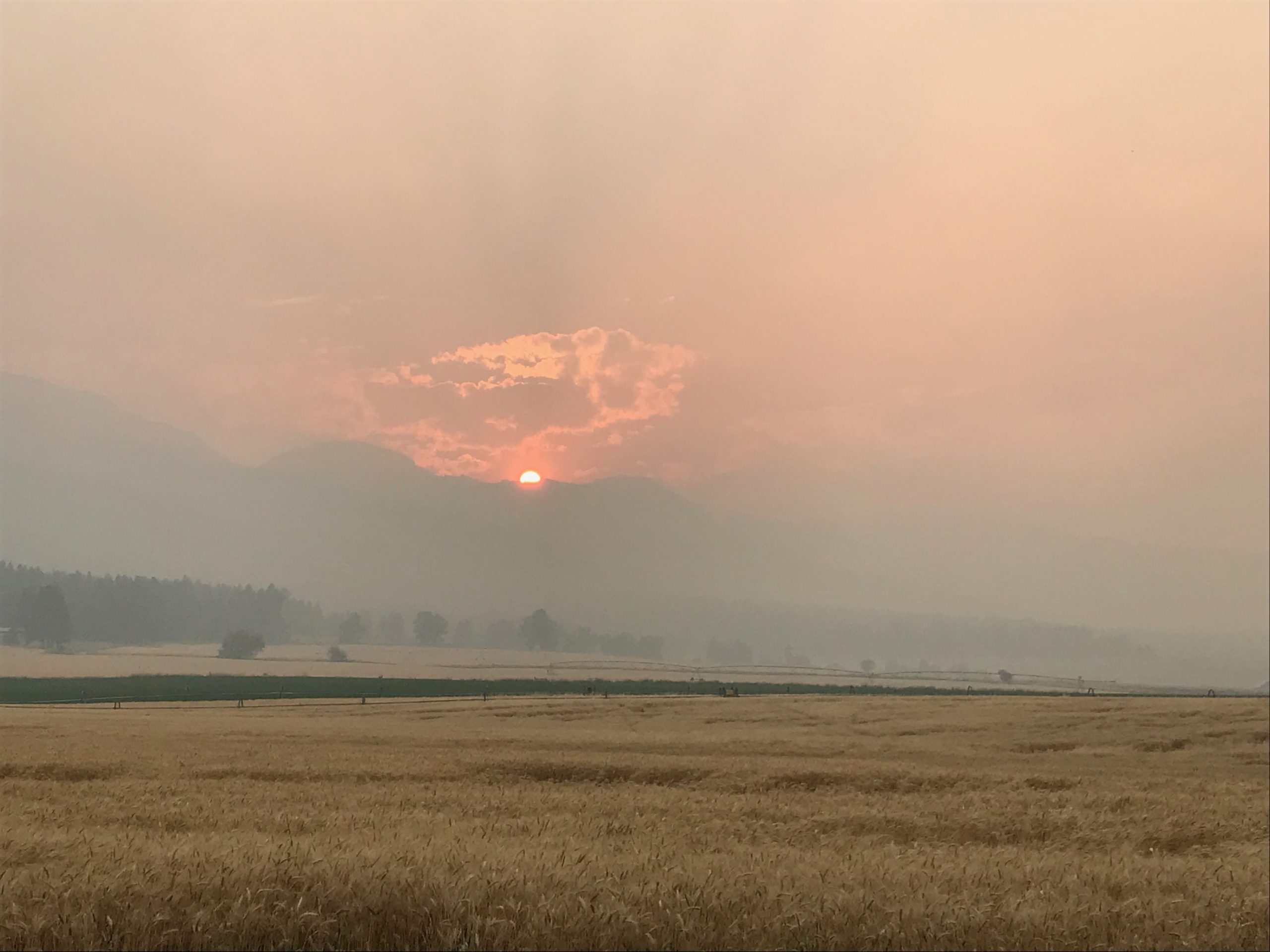
I took this picture last night, on my way back from my daily graining and check on Mocha.

The fire season is upon us, and is it ever a doozy. We were doing pretty well with rain accompanying thunderstorms until the next-to-the-last week of August, when a nasty set of thunderstorms passed through Northeastern Oregon and sparked off several big fires–to the east, the south, and the west, roughly. We are now at the largest fire complex in Oregon, but of course we’re not getting much coverage about it.

Typical. I’ve seen it before, when the only reason I knew what was going on was due to past connections with the area (I Have Very Cynical Thoughts but not ready to write about that yet).

In any case, there’s no immediate danger–so far. Today is the touchy day as far as Mocha is concerned–she’s located in a more vulnerable area than we are, and evacuation might be a possibility, though unlikely. The ranch is already dealing with evacuated horses from other areas, so if she can stay safely where she is, that’s a big plus.

But there’s wind, and dry thunderstorms in the mix, so it’s a day to be alert.

Meanwhile–let’s see. What has been going on lately?

The Netwalk Sequence reissue is complete, and now I feel comfortable putting it together in a box set (which will be its own craziness). Besides making a box set for it, I’m also going to be making box sets of the Martiniere Legacy series, the People of the Martiniere Legacy series, and the Goddess’s Honor series. Hmm. I’ve managed to complete FOUR series. How on earth did that happen?

(um, well, guess what I’ve been doing ever since Covid?)

At this point, I’m taking a break from big projects because, as I learned from doing the Netwalk Sequence revisions, this sort of production work eats my brain. Additonally, I need to have some down time after blasting my way through the three Martiniere series in nearly three years. I first semi-pitched the foundation for the Martiniere books to a small press publisher back in November of 2019, at Orycon. When they rejected the final project, I went ahead and…well, that’s how the main Martiniere Legacy happened. Four books there.

I ended up writing three character-based books tied to the Legacy–the People of the Martiniere Legacy. Three books there.

The Enduring Legacy kicked off a “what if” alternative version history. Two books there, the last of which (A Different Life: Now. Always. Forever.) will go into production once it’s been complete on Kindle Vella for the required number of days.

Nine books in that time period. Yeah, I’m a little frazzled. And that doesn’t count the rewrite of Seeking Shelter, Beating the Apocalypse, which I haven’t been promoting. But that was mostly-written, and just needed a push to get past some difficult spots. Nor does it count the novellas Bearing Witness or Becoming Solo, both of which were in the same position. I used Kindle Vella to push myself to get those stories finished. I have one more book in that position–partially written, that if I can get it drafted and out there, will be one less story niggling at my brain.

Now I get to think about new stuff–and what I am thinking about at the moment is breathing life back into my short fiction. It’s time.

But there’s another, more difficult world that I’ve been struggling with. Parts of it aren’t usable. They’re problematic, and reflective of my awareness level nearly twenty years ago. But there are some foundational ideas that I can breathe life back into, so I’m going to be looking at those possibilities.

Another thing going on, however, is that I’m in a position where I just plain have fewer spoons available to take on big new projects. The biggest thing is that I have a fast-growing cataract in the inside corner of my right eye. It slows down my work because of fatigue–both physical (eye muscles) and mental (coping strategies).

But hey, I’m a former special ed teacher! Figuring out coping strategies used to be my job!

Among other things, I’ve become a big fan of eyemasks with gel packs. I have a special one for bedtime that doesn’t involve elastic or Velcro to tug at my hair. Another, sequined one that I use to give my eyes a break during the day–I had bought it thinking it was useful for a sleep mask and, well, no. I keep the gel pack inserts in the fridge. The sequined one gets used for the other coping strategy, which is lying down with it on for an hour or so in the afternoon. Sometimes I nap, sometimes I just lie there and think. That’s been a huge help. I realized with the sleep gel pack mask that part of my problems involved facial muscle tension, and the cool pack really helped with that.

All the same, that plus the need to take more breaks than usual mean less productivity. And while I’m allegedly on “the list” for cataract surgery, everything is backlogged big time. I need to go rattle cages if I don’t hear anything today.

My laptop blew up and I’m trying to make do with my iPad when writing away from my desktop. It’s–not a perfect solution. I can draft on the iPad but not edit. Oh well.

So this is going to be a fall of short writing (um, for some definitions of “short”–I also plan to be working on stuff that will likely turn into novelettes), box set production and–the sorely hit-and-miss promotion piece.

Stay tuned, because I hope to be getting more out there soon!

Comments Off on Smoke, fire, Worldcon, cataract, writing…oh my!

Filed under Uncategorized

Happy Book Day, Netwalk’s Children!

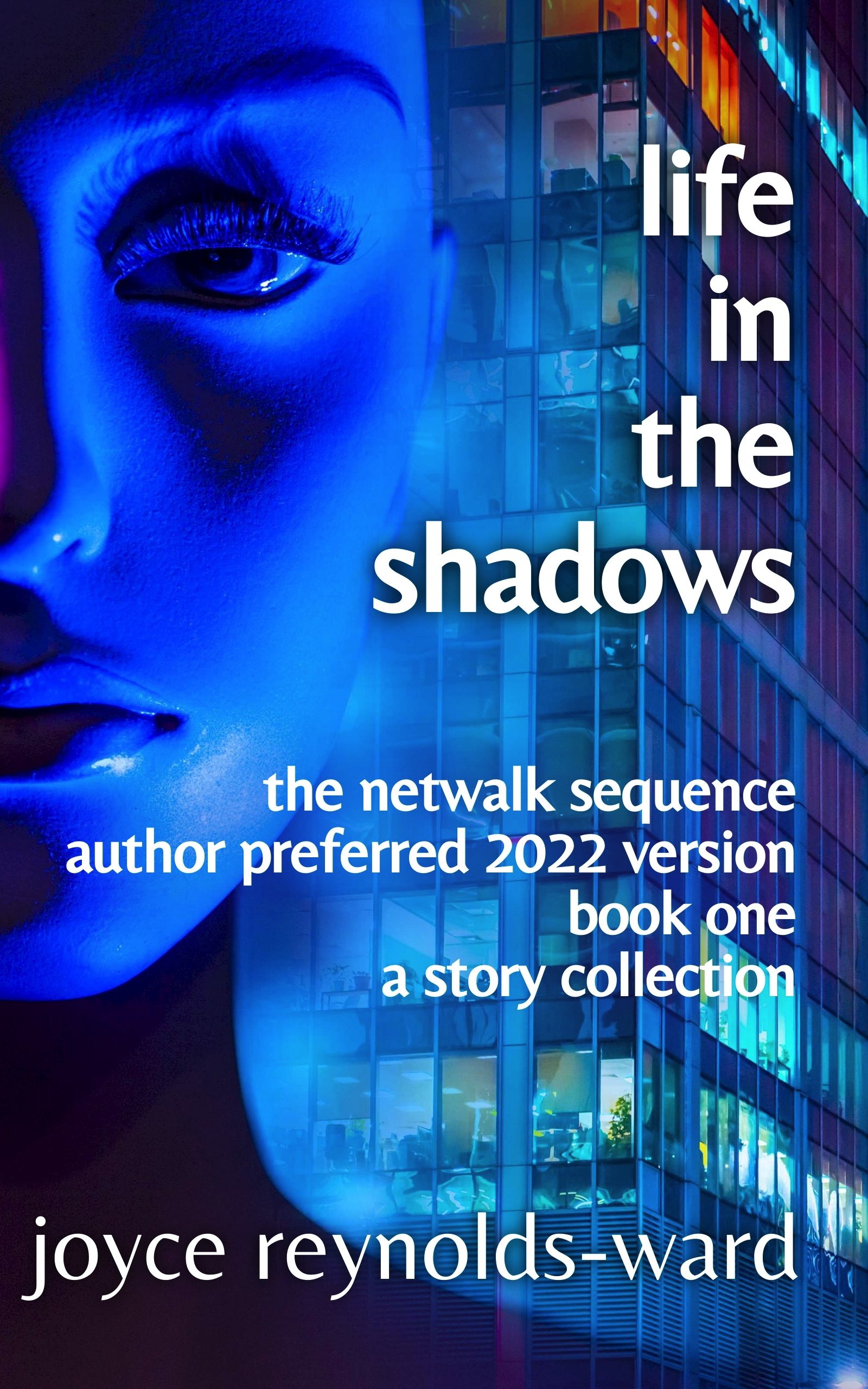
Honestly, I think Netwalk’s Children is my favorite book of the series. By the time I got around to writing it, several years had gone by and I had written a lot of previous backstory which is now out in Life in the Shadows. By this point I was starting to get a feel for book structure ingrained in my brain. But–I was also writing it during a major move, and I had resorted to creating a complex scene matrix to help me be able to turn around and pick up the thread of the plot quickly–writing in dribs and drabs here and there.

Editing this book for republication was also somewhat easier than with the first two. But oh dear Lord, I am so not using <> to indicate mindspeech in the future. I kept it in this series, but nope, not gonna use it in the future. Italics, m-dashes, all of that will be more effective. Continuity edits were a bit more necessary, but….

Anyway. Over the hump now with this book. Two more Netwalk Sequence books to go, and then the box set this fall.

I’ve also adjusted my price points. Alas, $6.99 isn’t working for sales. And since I want to sell books, well…dropped my prices to $4.99, and am organizing to do a bit more promotion.

I’m also experimenting with using QR codes on Book Brush. We shall see….

Comments Off on Happy Book Day, Netwalk’s Children!

Filed under Uncategorized

The political side of the Martiniere Legacy books

Revising the Netwalk books reveals just how political the Martiniere Legacy books–both the main series and the multiverse series–actually are. While Sarah Stephens is an old politico, Diana Andrews is a reluctant political leader, and we see a certain amount of organizational politics within the Corporate Courts, those books just aren’t political. They focus more on organizational and family structures, and the dynamics of power within interpersonal relationships. But there are no issues that could be classified as political. Certainly no significant social commentary. Some discussion of agency on a personal level.

Then again, some would argue that choosing to focus on four generations of powerful women dealing with a particular technology is a political choice in and of itself. I won’t argue with that.

But overall, the fact remains that the Netwalk Sequence books are really just not that political a series.

The Martiniere Legacy, however–

As I mentioned in a previous post about writing and politics, one of the reasons why I downplayed a certain degree of political content in the Netwalk Sequence was that I was still actively teaching. I erred on the side of caution, but, honestly, I also didn’t exactly have the skill level to insert much about politics in those books that wouldn’t look like overt preaching.

The Legacy doesn’t have that excuse. And, considering the main books were drafted in 2020 and 2021, it’s only logical that politics bled over into the series. While the series isn’t necessarily about politics, oh is it ever political.

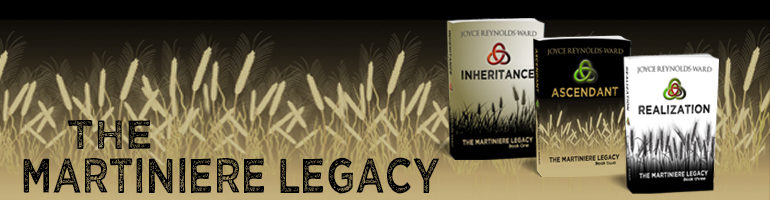
First off, one part of this world includes indentured servitude for people who can’t pay off their debts. Of course, things go drastically wrong with indenture right away. Just because someone signs a five-year contract doesn’t mean that they are released from their servitude at the end of that five years–I don’t go into those details, but it’s referenced as a secondary plot point in the third book, Realization, and a little bit in the second book, Ascendant. The possibility of Brandon, Ruby, and Gabe being forced into indenture as a result of Brandon’s gamble that including his estranged parents in the AgInnovator agtech funding game show will earn a certain number of clicks in order to pay off his own debt drives the first book, Inheritance.

But the ramifications of indenture continue to unfold.

Thirty-some years before the opening of Inheritance, in Broken Angel: The Lost Years of Gabriel Martiniere, Gabriel Martiniere testifies in Federal court against the Martiniere Group experimenting with mind control on unwilling indentured people (note: a mind control technology that was first used upon members of the Martiniere Family first–Gabe provides an unwilling demonstration of it in action when it is triggered during his testimony) . That testimony forces him into exile and leads into a whole lot of other complications. Winning free from those mind control elements is just part of Gabe’s story.

Reproductive rights is a huge part of the Legacy. We see that most clearly in Ascendant, where two formerly indentured women who are part of the Family need to have hormonal leftovers in their indenture identification tattoos removed. As part of the process, we also learn that Gabe’s sister Justine has spent years as the secret organizer behind an organization called Rescue Angel, providing reproductive services to people in need. As we learn in Justine’s book, Justine Fixes Everything: Reflections on Mortality, the combination of Justine’s work with the Rescue Angel and the demand from the Family that she step up to fix things that her brother Joseph and father Philip have messed up within the Martiniere Group leads to her divorce from Donald Atwood. Her marriage to Donald was somewhat pragmatic in the beginning–she marries him to escape the coercion from Philip that she marry a much older man allied with Philip.

Tied in with reproductive rights is–well–women’s rights. The Martiniere Family possesses a lot of misogyny, starting with the internal requirements of male leadership based on Salic Law–the Martinieres descend from the Valois family, have married into the Bourbons, are also descendants of the Medicis and the Borgias. Gabe doesn’t agree with those structures. Justine is only allowed access to power within the Group because Philip sees her as neuter–a severe case of hydatidiform mole in her one pregnancy results in a hysterectomy. Another powerful Family woman, Kendra, dies with her family under suspicious circumstances after she allies with Justine. And even though the Matriarch of the Martinieres, Donna, is acknowledged to possess some power (due to her role in developing the mind control programming), her abilities and access are restrained by Family structures.

And even though Gabe is somewhat liberated, he still has unconscious elements of the Family’s misogyny, manifesting as protectiveness. His hope that not telling Ruby who he really is will keep her safe goes violently awry when mind control structures are used first to silence him, then force him into divorce. His choice to support his second wife’s oldest brother in taking mercenary action against Philip Martiniere’s not-so-subtle attempts to make himself a petty dictator in the Southwest leads to Rafe Alvarez’s death, and Rachel’s estrangement from her family.

Even after his true identity is revealed, Ruby has to kick Gabe’s butt a few times to stop him from being so protective.

And then there’s Philip Martiniere’s quixotic political ambitions. Philip clearly studied several contemporary politicians (we will mention no names, but…). He developed a religious cult, the Electric Born, coupled with secret research labs to take mind control even farther than the Martiniere Group could dream. He had a notion to force his grandson, Brandon (Ruby and Gabe’s son) into becoming the indentured, cyborged head of a private military force. He experimented with cloning–both physical and digital–as a means toward immortality.

Philip also bargains for a leadership role in a splinter political party. By 2059, I postulate four major political parties in the United States–The Real Truthers (extreme right wing Republicans), Honest Republicans (centrist Republican of the old school, the Never-you-know-who faction), Classic Democrats (centrist Democrats) and New Democrats (classic liberals, not Democratic Socialists or Justice Democrats). Of course, Philip hews to the Real Truthers.

But–nothing is as it seems. Gabe gets into a sticky situation with the New Democratic President in Realization. His daughter-in-law Pat Markey ends up running for President, with Gabe’s financial support. We don’t get much deeper than that into electoral politics, however. One reason why I made that choice is because the sausage-making that goes into electoral politics often isn’t much to write about–and I know more about electoral politics than legislative politics.

And then there’s the whole issue of cyborgs and clones. I don’t go very deep into those issues, but one key to Gabe and Ruby getting custody of Philip’s clone Michael is the assessment that Michael is a Martiniere Group property, and as the Martiniere-designate, Gabe is given the authority by the Board to take Michael from Philip. Ruby and Gabe then raise Mike to be his own self, not Philip’s clone.

Philip also created cyborgs from the sons of indentured women who were inseminated (via AI) by his adoptive son Joseph. They–along with Brandon–were intended to be the leadership of Philip’s cyborg military. While that didn’t get very far…the issues of body autonomy and control end up being a factor in Realization.

Well, this is getting long, and I want to post some links. Since Amazon is the main distributor that organizes books by series, these are Amazon links, to make it simple.

The Martiniere Legacy (Inheritance, Ascendant, Realization)

The People of the Martiniere Legacy (The Heritage of Michael Martiniere, Broken Angel: The Lost Years of Gabriel Martiniere, Justine Fixes Everything: Reflections on Mortality)

Comments Off on The political side of the Martiniere Legacy books

Filed under Uncategorized

Writing and Politics–The Martiniere Legacy

I’ve kind of been getting really annoyed about a bunch of stuff circulating both within political Twitter and writing world about politics.

Within the political Twitter world, there are a bunch of pundits out there that, frankly, have me shaking my head and saying “I could do better.” Not only do I hold an actual, y’know, degree in Political Science with an emphasis on electoral politics, but I have 20-plus years of experience in electoral party politics and several years of union organizing experience. I’ve just never gone there, because while I’ve done ‘zine-level political writing (in the ’90s) and wrote a column for my university newspaper while getting my Masters in Special Education, I’ve not liked doing a lot of the pundit-type writing. Now I’m wondering if I shouldn’t have stuck to it and tried to go national, but…oh well, such is life and that possibility would have required many different choices back in the ’80s and ’90s.

Nonetheless, I suspect I’ll be dashing off a few rants of my own, including resurrecting some articles about political involvement that I wrote in the ’90s and updating them for the current era.

Within writing world, there’s some folks kicking up a fuss about politics in fiction. Generally, in this situation, what they mean by “politics in fiction” are specific political stances that might cause a reader to put down an author’s book. But I don’t believe those people advocating for “no politics in fiction” have thought it through. I suspect that they associate “politics in fiction” with situations where the main characters stop the story to lecture the reader. Or situations where controversial issues with which they disagree pop up. But fiction glorifying war? Promoting a particular faith? Suggesting that women are unfulfilled unless they return to a traditional, small-town life?

(Yes, I’m simplifying. Yes, this is a broad brush.)

Anyway, people, those stories are just as political as the ones you abhor.

Politics in fiction isn’t just about the overt, A plot. I defy anyone to show me a piece of writing that doesn’t have some sort of politics in it based on religion, sexuality, socioeconomic status, societal structures, power inequities…all of which have political implications.

It’s inescapable because we all have basic presuppositions about society and how it should be organized. Those presuppositions carry through in how a writer builds the characters, the world, and the plot. No matter if we’re talking a piece of fluff written for pure entertainment or a Significant Commentary on Modern Life, the writer’s essential presuppositions will carry through into their work.

Recently, for promotional reasons, I thumbed back through the Martiniere Legacy trilogy (which will become a quadology this fall). I had tended to dismiss the political B plot as not being significant.

Hoo boy, was I way off base.

The political elements in the main Martiniere Legacy books are: creation of an indentured servitude class due to all sorts of debt issues; the agency those indentured workers may or may not have over their own bodies during the duration of their contracts; reproductive rights, especially with regard to those indentured workers; a major corporate leader dabbling in political leadership of a splinter far-right political party and making a run for President; and a tiny bit about corporate ownership of cyborg and clones. It’s all B plot, but I hadn’t considered that trilogy to be as political as it is on rereading–especially in the second and third books.

Granted, I published Inheritance, Ascendant, and Realization in 2020. All the same, thumbing through them during this past week has been rather of a smack in the face. When I put those books together, I was reading the trends and projecting, slightly.

I just didn’t realize how bleak my presuppositions are right now.


Comments Off on Writing and Politics–The Martiniere Legacy

Filed under Uncategorized

Update…and one of those sweet June nights

It’s been a busy time since the end of April. I took on some new volunteer activities–writing and community-oriented. But I was also just trying to get back on track with a bunch of other things that were going on besides writing, like changing seasons, and–I don’t know. Just plain dealing with stuff and maybe burnout. I don’t know. Another factor was that I fell behind in getting Netwalker Uprising edited and uploaded, which has rolled over into the next Netwalk Sequence book, Netwalk’s Children. Fortunately, Children shouldn’t be as difficult to deal with as the previous books.

And June has been all about woodcutting, and morel hunting–we now have a gallon and a half of dried morels, with the season probably spluttering to an end.

It still doesn’t explain why I’ve not been so productive lately. Though a probable reason has presented itself–an eye examination revealed that I may be developing glaucoma, and that I have a cataract that needs to be assessed. Now that’s entirely probable as a cause for why it seems to take longer–eye focus issues and the like. Eh, it’s probably all multi-causal.

Meanwhile, tonight was one of those horse girl dream moments. There are times that I think I’m regressing back to my teen years with horses–only with a better quality of horse. Mocha’s summer pasture has a corner section that she doesn’t spend a lot of time in when she’s by herself–she has an old friend from past summers over the fence, and he fusses when she is out of sight. The two of them are sickeningly cute at times–Blue starts hollering for her when I pull up, even before I catch Mocha. And when they’re together, they’re nuzzling and touching. I don’t see her doing that with a lot of horses. She’s usually standoffish. So he’s a definite if demanding but trusted friend.

But she’s also willing to spend time with me, and if I hang out with her in that corner pasture, she’ll graze for a while without fussing before she wants to go to her buddy. If I’m on the ground, though, she’s more antsy and worried. Tonight, I thought I’d try sitting on her back and see if that made things any different.

It did. She grazed with me sitting on her for a good forty minutes, not fussing, just calmly moving around the field. And I indulged myself in behaving like a teen girl with her beloved horse. Just sitting on her, looking around, watching her graze. I even lay down on her back for a bit. Not necessarily something I could do with the broncs and half-broke greenies I rode as a kid!

Mocha didn’t fuss, either. She just settled in for a nice graze.

One big difference between her and the horses I had as a kid is that she doesn’t cruise the field eating nothing but the seed heads off of the grass–a good thing in a year like this one with lush pasture. Both my pony and my horse did that, and developed founder as a result. I have to wonder if that was due in part to grain being a much more significant part of their diets all their lives, as opposed to Mocha. My parents bought sweet feed, and that’s what the horses got. They had a greater taste for grains.

Mocha has primarily had pelleted feed or straight oats as a low-dose supplement to forage, often more as a side dressing for supplements than anything else. Hay and grass have been her primary feed all of her life. When I think about the amount of feed I’d scoop into a coffee can for my horses when I was a kid, I shiver now. Recipe for disaster.

But Mocha? She likes her pelleted feed, which is primarily beet pulp with other additives. At most, I’ve fed her two pounds once a day, rather than the 7-10 pounds recommended for horses of her age and weight.

She just won’t eat that much of her pellets unless she gets it several times a day, and I’m not sure she’d eat that much even then. She just loses interest after a pound and a half to two pounds.

Last summer the barn owner told me about a recommendation for feeding Strongid-C–a feedthrough dewormer–to senior horses, not just for deworming but to help build up topline and improve weight retention. I started doing that last August–and within a month, I noticed a big difference. She was less tense. Filled out more. And, most interestingly–she wanted less grain. Right now, with fresh, rich grass, she’s getting a half-pound to three-quarters pound of her pelleted senior feed. She looks better than she has for years, her coat is glossy, and she has more energy.

Now when it comes to grass, she’s a connoisseur. She spent two springs on a field north of town, in prairie country that still had some bunchgrass and other native plants. The second spring we put Mocha on that field, she took two steps off the trailer. Then her nose went down and she started grazing. I don’t think she came up for air.

I started hand-grazing her this spring as the grass started coming in. One thing I noticed is that at some point, she will choose grass over hay. But she doesn’t gobble all of it, as I saw tonight. She grabs several mouthfuls low down on the stem, then chews them. Often she’ll press her nose to the ground, and might even start sniffing. Not sure what that’s about, but it’s clear she’s using scent to identify certain desirable grasses.

And it was a quiet, peaceful evening. Fluffy clouds in the bright blue sky, casting interesting shadows on the mountains that still hold a bit of snow. Just sitting on a good horse’s back, chilling and relaxing together.

Day after solstice, and it was pretty darn nice.

Here’s one view:

Comments Off on Update…and one of those sweet June nights

Filed under Uncategorized

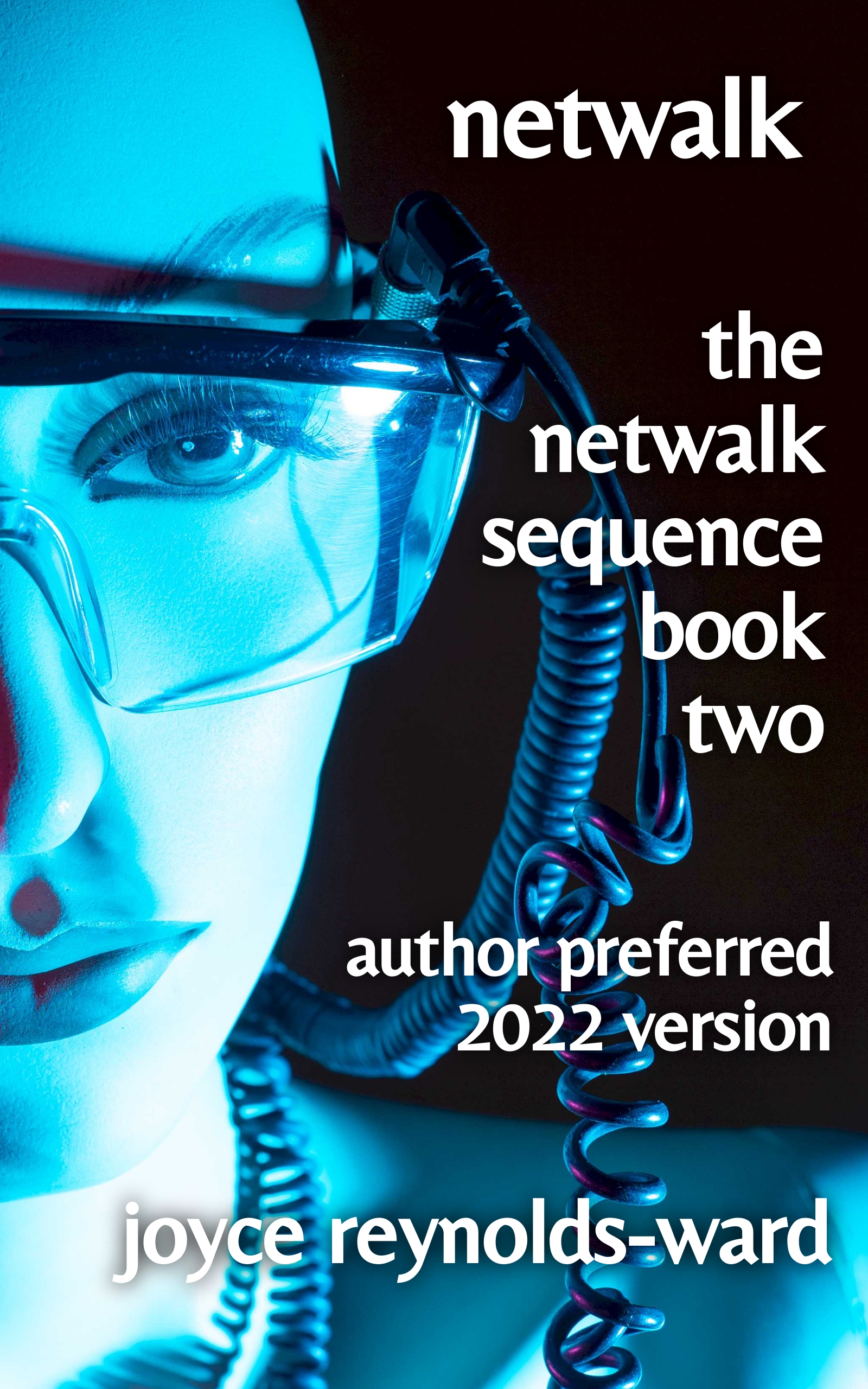
Happy Book Day (for the third time) Netwalk!

Some of you may be wondering why this is the third Happy Book Day for Netwalk. Easy enough to explain. Netwalk was the first book I self-published, way back in the Wild West selfpub days of 2011. The first cover was…uh, kinda sad, and I forget how the layout looked.

A year later, the son did the layout in InDesign and I managed to get a cover artist. That cover is still lovely, but–as it turned out, the rest of the series had multiple artists (including me), there was no consistent branding, and…not only were there continuity problems and layout that wasn’t up to 2022 standards, but the tech rapidly became outdated. Additionally, when I first published Netwalk, I really didn’t have a firm grasp on the backstory. Most of Life in the Shadows was written between Netwalker Uprising and Netwalk’s Children, and I still didn’t really have that solid a grasp on the nature of the overarching series conflicts and how they resolved. This series…I tell you, this series taught me a LOT about what to do and what not to do when writing in a series. I was still learning when I wrote the Goddess’s Honor books, but the Martiniere Legacy series was the culmination (so far) of what I’ve learned about the dos and don’ts of series writing.

The Netwalk Sequence, though…it was my original love, and it needed repair. Badly. I didn’t feel like trying to promote it at all.

Therefore, I decided it was time to create a new edition. Originally, the Author Preferred release was going to be 2021. However, things happened, including an outbreak of more Martiniere stories and snafus with cover artist availability.

Then I got BookBrush. Found a series of photos on Depositphotos that really do fit the whole series concept so much better than some of my original concepts. Spent money on the original editor (hi Catja, and thank you!) to vet my revisions.

Diving back into Netwalk itself didn’t have the same dire associations as Life in the Shadows did with political gloom and doom, though there’s still a bunch of that. I tweaked that a bit more, updated some wonky formatting, and fixed a bunch of continuity problems that just hadn’t gotten themselves fixed the second time around. In the process, I managed to sharpen Melanie up, clarify the degree to which she’s ADHD but still makes things work (helps that I finally admit to my own ADHD), and drilled down on the family conflicts.

Plus this blurb is multiple-multiple times better than the original.

Note: You don’t have to read Life in the Shadows to appreciate Netwalk, although it gives you a deeper understanding of the conflicts between Sarah and Diana. There’s a reason why Shadows is now officially Book One, instead of being just Related Material. Although, annoyingly, Shadows still doesn’t have the “Look Inside” feature activated, while Netwalk does.

So, for those of you who haven’t encountered Netwalk before–here’s the blurb, this time around.

*************

IN A TECH-DRIVEN FAMILY, HARD CHOICES PASS TO THE NEXT GENERATION

Mother against daughter.
Grandmother against granddaughter.

Melanie Landreth has maintained a lonely outpost as the President of Do It Right North America for seven years. Her grandmother, Sarah Stephens, the President of the Confederated States of North America, rules the continent with an iron fist. Melanie’s brother Andrew is one of Sarah’s lackeys. Their mother Diana controls Do It Right outside of North America, and engages in secretive maneuvers aimed at overthrowing Sarah’s reign.

Will things ever change?

When they do, who will survive?

What role does the Disruption Machine—now known as the Gizmo—play in the emergence of the new Netwalk technology? Why does the Gizmo manage to unite Sarah and Melanie’s mother Diana, when they disagree on just about any other subject?

The struggle for control within this family can change the world—for better or for worse.

And Melanie wants to be the winner.

Amazon link here.

Books2Read (Apple, Barnes and Noble, Nook, and more) here.

Enjoy!

Comments Off on Happy Book Day (for the third time) Netwalk!

Filed under Uncategorized

Announcing–the Martiniere Multiverse

Well, it’s happening again. This notion has been bouncing around in my thoughts for several weeks now, and I’m making it formal. Besides A Different Life–What If? being released on April 20th, I’ve decided to go ahead and start formally working in what I now call the Martiniere Multiverse–a series of stories based on turning points in the life of Gabriel Martiniere in the main Martiniere Legacy canon. Because I’m releasing What If?, I ended up revamping the cover and writing a brief summary of the Multiverse which will go into the back matter of each Multiverse book (and updated as needed).

Essentially, there will be four separate multiverses–the one represented by the A Different Life trilogy (What If?, Linda’s Story, and a third one which has an idea but no title yet). In the  A Different Life series, Gabe’s family doesn’t die in a plane crash when he is twelve, he and Ruby meet when she is in college and–things happen much differently from the main Martiniere Legacy series. Amongst other things, this trilogy is heavy on the romance side of things. But all is not peachy-keen for our protagonists. They have a lot to overcome. Clues to the emergence of A Different Life will be found in Repairing the Legacy, the last mainline Martiniere Legacy book.

Another one, which may involve a single book, has Gabe telling Ruby who he really is when she becomes pregnant with their son. You find clues to that possibility in Broken Angel: The Lost Years of Gabriel Martiniere.

Another is when Ruby’s friend Remy Trask realizes that the Gabe Ramirez who married her friend Ruby is the Gabriel Martiniere who disappeared after his testimony in US vs Martiniere Group, the case that made her resign her position as an Assistant United States Attorney in Southern California. This likelihood is also found in Broken Angel: The Lost Years of Gabriel Martiniere.

The final one is A Widow’s Vengeance, where Philip kills Gabe during that fateful meeting where he demanded Gabe divorce Ruby in the mainline Martiniere Legacy series. Gabe’s true identity is revealed when his body is found. Ruby, toddler Brandon, and her unborn daughter become players in the power struggle to depose Philip Martiniere, with Ruby as the avenging widow, in alliance with Gabe’s sister, Justine Martiniere. And Gabe’s daughter Gabrielle becomes a power as well (posthumously born and named after her father, while Ruby is still deep in mourning Gabe).

The stories (except for the A Different Life trilogy) will include the digital clone structures I introduced toward the end of The Heritage of Michael Martiniere in the main Martiniere Legacy canon, along with more details about digis in Justine Fixes Everything: Reflections on Mortality. Different Gabe manifestations becoming aware of each other in dreams across several universes—but the controlling character is Gabe Prime (for lack of a better description) in the mainline Martiniere Legacy series, as a digi. First in his own dreams, then after Gabe Prime’s death and resurrection as a digi, his appearances in the other universes (especially a factor in A Widow’s Vengeance).

The multiverse aspect of the Martiniere stories is tied to the different worlds of these spinoffs. And, provided the universe allows, I’ll write them all (along with other things). Once Linda’s Story is completed, I plan to write the explicit Martiniere Multiverse story involving Gabe Prime and his awareness/involvement as a digi in those other universes.

That story will be called Dreamwalker: Gabriel, and I hope to have it written and ready for publication by December, 2022.

The others will be after Dreamwalker.

(And meanwhile, I glare at Gabriel Martiniere while he smirks and gives Ruby a kiss. He’s awfully good at that. And that enigmatic grin of Ruby’s is just as knowing. Don’t count Ruby out because she’s just as responsible for making this happen.)

Comments Off on Announcing–the Martiniere Multiverse

Filed under Uncategorized

The Table’s The Thing…my latest promotional theme

So in an attempt to kinda sorta get my promotional chops into gear, I’m trying to think of unifying themes that are part of my writing. Of course, as it turns out, the week I decided to kick it off was also a week full of Much Personal Life Craziness (which continues, somewhat). Not so much the Big Bad Stuff as it is just bits and pieces of weirdness and PITA stuff to manage at a time when it would be really helpful to be able to concentrate…oh wait, doesn’t that sum up most of life post-March 2020?

The first thing that came to mind was food/eating elements in my different series. A few years ago, I took a writing workshop with Jamie Ford (Hotel at the Corner of Bitter and Sweet, Songs of Willow Frost, Love and Other Consolation Prizes). He suggested we write a food preparation sequence as a part of our character building process. Well, since I was working with a new character in the Goddess’s Honor series, I wrote a sequence about her…which really expanded the series. She’ll be a part of the new series in that world, Goddess’s Vision. And since Goddess’s Honor is the series I am going to try to showcase next week…well, I’ll write more about it there.

Anyway. I wrote the Martiniere Legacy books after that workshop, and it has several food-related, plot-advancing scenes (as well as character-building sequences). One of the things that came out of that writing was the development of an inanimate third character of sorts–the green Formica and chrome, 1950s-era, kitchen table.

I happen to own one of those–it came with the Enterprise house, and it forms the background of the picture above. I grew up with one of those tables–only it was gray and white, not green and white. I used to stare at portions of that gray and white table and think I saw warhorses being ridden through a clearing. This was a very early memory, so I guess I was thinking about fantasy even as a little kid.

The table in the Martiniere Legacy, however. It’s a gathering place at the Double R Ranch. In looking back at the series, including the slowly-proceeding Repairing the Legacy, that Formica and green table is somewhat central to a lot of what happens. Gabe’s sister Justine likes to perch there when she’s at the ranch–it’s her favorite place to work. Gabe has heart-to-heart late-night talks with Ruby’s grandfather Ron at the table. And more. If that table could talk….

Here’s some snippets from the main Martiniere Legacy trilogy to give some idea of the range of discussions that happen at the kitchen table…

*******

Justine, Philip’s daughter, sat at the old green Formica and chrome kitchen table, a bottle of whisky sitting next to her as she studied her screens.

“Don’t you know only the lower classes drink straight from the bottle?” he said, just like Philip would say when he caught them doing something during their teen years that he considered to be déclassé and not worth of the high status of a Martiniere.

 From Inheritance—Outtake—Gabe

*******

 Morning brought swirls of fog over half-melting snow and ice on the ridges around the home place, but the mountains still stood out above the fog. Ruby soaked in the familiar, beloved views while sitting at the kitchen table and choking back a piece of toast and sipping a cup of fake coffee. Home. The craziness of the Innovator seemed to be very far away from her cozy kitchen with the view of mountains.

From Inheritance—Chapter Four

**********

 Ruby sat down hard at the kitchen table after Paul left, and buried her head in her hands again. Vickie patted her back.

“Beck,” she called up the stairs. “Do you know where the good booze is?”

Beck thumped down the stairs. “No, but Charlie does. I’ll go ask.”

“I shouldn’t be drinking,” Ruby said into her hands. ”I should be riding out there with them.”

“No,” Vickie repeated. “This isn’t the Old West, and the Home Guard is here to protect you and the ranch. Let the pros do their job.”

From Inheritance—Chapter Thirteen

*********

 Justine sat at the ‘50s-era green Formica and chrome table that had been Granma’s pride, two screens shimmering in front of her as she talked to someone, voice only, typing on the virtual keyboard hovering over the table. She waved as Ruby entered the kitchen and pointed toward the coffeepot with a grin.

Real coffee, then.

From Ascendant—Chapter Three

********

 The welcome scent of real coffee wafting from the kitchen was a signal that Gabe’s half-sister Justine was definitely at the ranch. As Ruby entered the kitchen, focused on the coffee, Justine was settled at the old Formica and chrome table, glowering at her screens. Her usual perch when she was at the Double R.

From Realization—Chapter Two

 *********

Ruby poured her coffee and sat across from Justine. “Things going okay? Hardly seen you since everything blew up.”

Justine scowled. “Daddy dearest is outright pissed about your killing Joseph.”

From Realization—Chapter Two

(And, as always, I flinch because I see two edits I should have made. Always. Always. No matter how many times, no matter how many eyes…always)


Comments Off on The Table’s The Thing…my latest promotional theme

Filed under Uncategorized

The impact of format on writing style

Working on the revisions of my first published book, Netwalk, has really slammed home the degree to which format has shaped changes in my writing style. When I wrote the original Netwalk, my reading experience was primarily hard copy works, not online, reading apps, phone, or tablet.

This wasn’t something I noticed as much when working on Life in the Shadows, in part because much of that work was composed after the first publication of Netwalk, after I had more experience and observation of electronic publication. But the process of revising Netwalk, especially going back to it after working on some Kindle Vella episodes, definitely shows an evolving difference in style, especially when it comes to paragraphing. Hard copy only Joyce wrote in big paragraphs, big blocks of sentences. Electronic Joyce breaks up the paragraphs and structures them so the shorter paragraph length flows better–which requires some work in the final edited versions.

Why?

A very simple reason. When reading ebooks–and that is my primary form of reading these days, ever since I acquired an iPad early in the pandemic and started reading library ebooks–I found that looking at a paragraph that filled the entire screen was daunting. Visually tiring. If I ran into several screens with no paragraphing, I groaned and flipped through them, thereby missing a lot of what was most likely juicy and good stuff.

It’s also pretty darn telling when I put the work into Vellum for final formatting and production. The acquisition of that piece of book production software really helped me see how things looked on ereaders, and brought the realization home to me that I need to do something different. So–modify my style.

This change required some thinking about sentence and paragraph structure and organization. Because I’m somewhat ADHD, I often tend to veer into a lot of parenthetical diversions within sentences and paragraphs. They can be fun, but they can also be confusing for a reader. When I did the first revision of Netwalk Author Preferred 2022 Version, before sending it off to the editor, I started the process of paragraph and sentence reorganization.

(Note: this parenthetical usage is an observed behavior amongst ADHD-er writers. This Reddit has some interesting observations. I–uh–feel VERY seen when I read it.)

Fixing this does require a bit more editing work, especially since I apparently was overambitious in cutting some things out. The Martiniere works are where I really started paying attention to the paragraph and sentence flow, looking for ways to modify the parentheticals into something that isn’t quite as clunky and chonky. It’s a lot easier to do in initial drafting than it is now, with that early first work. Part of that is because the new work is part of my current writing process, whereas I’m trying to update my old writing style as well as update the tech in that first work.

On the other hand, I can be dispassionate about revisions because of all the years between that original drafting and this version. Working on Life in the Shadows also helped me refine the central conflicts within the series arc. This time around, I know where I’m ending up. Where the character arcs need to go. This is also as much a series continuity edit and revision as it is anything else.

Some may grumble “why do you feel like you need to modify your style for electronic readership? I won’t do that and I don’t see why anyone else should. Be true to yourself!”

Because a writer’s style can and should evolve as they grow and expand as a writer. Because I want to remain relevant to my readers as long as I can. Because I see electronic publishing becoming more and more important as years go by, which means not only tweaking my style to fit these newer mediums, but learning more about them and trying them out. Sure, I may groan about trying to suss out still another platform, another way of doing things.

Being true to myself means a commitment to keep on learning and developing, until it is no longer possible. As long as what I write is still my voice, then as far as I’m concerned, it works. I’m here to tell stories and engage readers. Not clutch desperately to outmoded stylistic methodology. I just need to figure out how to make it work in this format.

After all, before Mary O’Hara wrote the My Friend Flicka trilogy, she was a script doctor for silent movies*. She had to think in concise, precise phrases in order to convey dialogue and exposition. But when you look at her novels, she composes sprawling, vast, lush prose with metaphysical digressions. She changed her style to fit her format.

Certainly I can do the same sort of thing.

*Source: Flicka’s Friend: The Autobiography of Mary O’Hara. I bought this book many years ago and don’t regret it one whit.

Comments Off on The impact of format on writing style

Filed under Uncategorized

Shadow Worlds and alternative histories

Well, after finishing up the edit for Shadows, I scampered right back to the Martinieres. Can’t help it, they’re a nice antidote to some of the foundational darkness of the Netwalk books, and allow me to explore some political themes without being painfully explicit. On the other hand, I like this version of Shadows much better than the original edition. I think it reflects the foundational premises of the Netwalk world much more clearly than the first version, and honestly deserves to be called the first book of the series.

I was on a Weeknight Writers panel about Civilizations and Conquest yesterday, and the discussion (and subsequent followup on Discord) stirred some thoughts about how I handle near-future writing. I realized that I’m not really projecting our current world in my near-future work (how can I, if I provide actual dates?) but am chronicling points of divergence. This holds true for all the Martiniere worlds as well as the Netwalk world (no alts want to pop up there. Not sure if I’m relieved or worried. On the other hand, the Martiniere worlds provide plenty of divergent points to keep me busy for a very long time. But! Things will not be all Martiniere, all the time. Besides the Netwalk releases, I have other short projects to get out, and then the new Goddess’s Vision series, which is simmering right along, thank you very much).

It’s safe to assume that every single one of my near-future science fiction stories is based on a point of divergence from our real world history, and go from there. Maybe I need to start putting disclaimers on those stories.

Martiniere divergences

In the mainline Martiniere Legacy series (call it Martiniere Prime), indentured servitude became a spoken and actual reality sometime in the mid-’00s. Not something you’ll find in any of the stories, because that’s just my headcanon. I might even mark the point of divergence of the main series from our world as happening sometime in the 1990s, about the time that the internal family battle between the eldest twin sons of the Martiniere at the time, Louis, became dangerous and destructive, both within the Martiniere Family and the Martiniere Group. Saul and Philip’s battle for dominance threatens to shatter the centuries-old structure of both Family and Group. It’s only somewhat settled by the births of Gabriel and Joseph in 2001, in that nasty little twist where Saul and Philip reluctantly agree to bring up each other’s firstborn sons, born to their respective wives–all done through IVF, thoroughly documented processes followed up by DNA tests of both boys at birth. Gabriel is the son of Philip and Angelica, Saul’s wife. Joseph is the son of Saul and Renate, Philip’s wife. The agreement is that both boys will be told about their true parentage at age sixteen. That doesn’t happen in the mainline Martiniere Legacy because Philip reneges on his agreement and brings about the death of Saul, Angelica, and their daughter Louisa through a plane crash, when Gabriel is twelve. He then–unsuccessfully–attempts to sway Gabriel to his way of thinking.

While climate change is an issue in the mainline Martiniere Legacy series, the Martiniere mind control programming, especially the versions forced upon Family members and unwilling indentured workers, is much more dominant. It eventually leads to the creation of digital clones capable of surviving after their originating personalities’ deaths, and there will probably be more stories further on about the chaos that results from that mess (consider Justine Fixes Everything: Reflections on Mortality, to be an introduction to those eventual stories–along with The Heritage of Michael Martiniere.)

The first alternative Martiniere series, A Different Life, was kicked off by speculations within the current Martiniere Prime work-in-progress, Repairing the Legacy. There’s going to be probably about three books in Martiniere-ADL, all based on a point of divergence where Gabe’s family was not killed in a plane crash in 2014. But Martiniere-ADL will have climate change as a stronger dominating theme, past the first book, A Different Life–What If? So far, I have two more, perhaps three more stories thought out in that world. What If? will release in April, and all those Martiniere-ADL books will be tagged with A Different Life in their titles. I’m currently working on a story about Ruby’s friend Linda, a peripheral character in What If?, and have a notion for a story about Gabe’s sister Louisa and her love Remy Trask, as well as a story about Justine and Donald’s daughter, Marguerite, who becomes the first female Martiniere. In the ADL world, that is.

Interestingly, Gabe-Prime is aware of events in Martiniere-ADL–primarily through dreams. Gabe-ADL is also somewhat aware of Gabe-Prime.

But there are more possible divergences in Martiniere Prime. What happens if Gabe tells Ruby who he really is before they marry? Or if he is killed in that fateful confrontation with Philip before the events leading to his and Ruby’s divorce? Or if he survives–but Ruby figures out who he is just before the meeting, and things blow up? I’m not sure about those stories, but I’m playing with the notion that Gabe-Prime becomes a dreamwalker in his last years, leading up to his becoming a digital clone. Martiniere-Dreamwalker stories may end up being those digital clone tales. Not sure about it yet. There’s also the faint possibility that these are just elder fantasies and wish-fulfillments on Gabe-Prime’s part as he ages. It’s something that’s simmering away. At the moment, though, the only definite alt series is A Different Life, with different branding. Here’s the cover for What If?

Netwalk divergences

Netwalk is much simpler. It branches off from our world in the 1990s, starting with the ascendance of a Trump-like political figure in the late ’90s who destabilizes the US at the same time that the USSR is falling apart. Corporate rule becomes much more explicit. Climate crisis is still happening but it’s an undercurrent. The political unrest is real, and there’s a lot more nation-state battling both internally and externally. Think the current state of affairs, moved forward about twenty years. There’s a sense that multinational corporations are the only somewhat stable political entity out there.

Netwalk world in 2022 is definitely darker, with a lot more going on. Somewhere in this time period, limited nuclear war happens. I projected the Saudis–later overthrown–as taking over the oil-producing parts of Southwestern Asia and North Africa, to the point where it has the label of the Petroleum Autonomous Zone after one heck of a bunch of fighting. Development of drones accelerates and is much further along in the world of Netwalk 2022. The US, China and Russia are fragmented entities, limping along and torn apart by internal struggles brought about by climate change, limited resources, and pandemics. This allows for corporations–multiple multinationals–to become more dominant. Corporate leaders frequently become corporate leaders. And then the arrival of the Disruption Machine stirs up even more chaos, as it circulates around the world randomly killing cities.

Shadows chronicles the prelude to the Disruption Machine’s arrival, followed by the aftereffects and the rise of Sarah Stephens to power. Sarah is an immortality seeker–somewhat like Philip Martiniere in the Martiniere books, only more rational–and figures out a way to continue her influence and power after her death. But while she starts out sane, her indiscriminate use of nanotechnology to maintain a youthful appearance and fight off the effects of aging backfires on her–big time.

One of the big differences between Netwalk and Martiniere worlds is that spaceflight happens in Netwalk. Never happens in the Martiniere worlds, in part because environmental catastrophe just makes it too much of a challenge.

But the other factor is that Netwalk was born of the late ’90s and early ’00s, and to some degree reflects the concerns of that era. The Martiniere worlds are a product of Covid and what we’re seeing right now.

We’ll see how it all turns out.


Comments Off on Shadow Worlds and alternative histories

Filed under Uncategorized