
Some thoughts about writing and organization systems

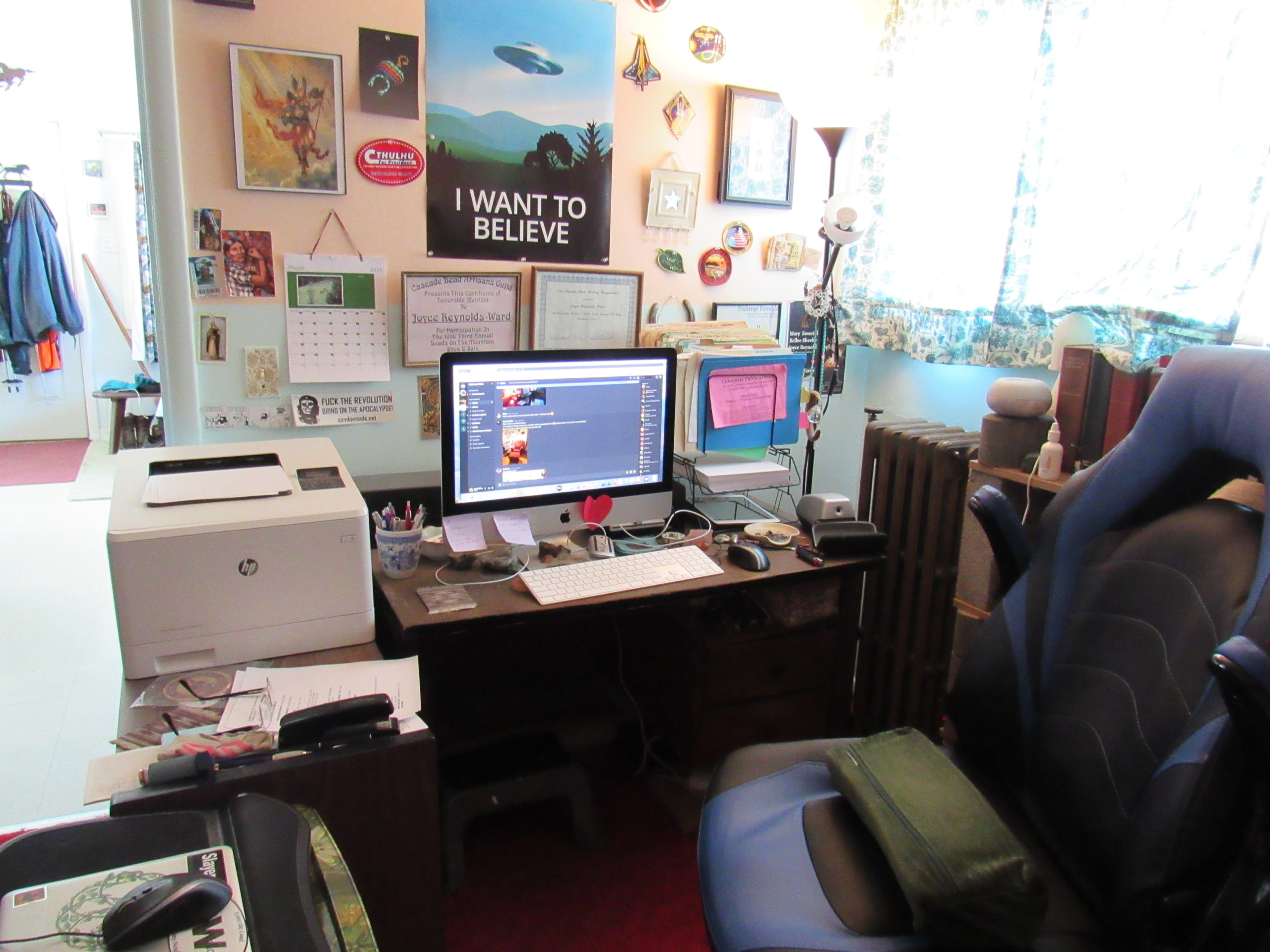
Illustration of office

Planning promotion; picture by author

There’s been a lot of talk recently about plotting vs pantsing (ie not-planning) on writer social media lately, including big publications like Literary Hub. The more literary venues tend to see discovery writing as a virtue–start with an idea and poke at it until a story emerges. Lots and lots of words getting put down and lots and lots of words getting discarded.

But pantsing/discovery isn’t limited to literary writing. I’ve encountered that notion amongst genre writers as well–perhaps not to the extreme of the lit crowd. Genre discovery tends to be more focused on “here’s a story I want to tell (often character-based), here’s the rough idea of where I want to go” rather than poking at a theme or an idea until a story emerges.

Well, that works for some people. But I’ve discovered over the years that I have achieved the most with my writing when I have some sort of organization or system to my writing. Part of this is due to the fact that I have unofficially diagnosed ADHD–that is, unless you consider a universal agreement by fellow special education professionals to the statement I once made to the effect that “I think I have ADHD” as a professional diagnosis. Several experienced sped pros with 10-30 years in the field, including a speech-language pathologist and an educational psychologist, snorted and all said “DUH.”

At sixty-four years old, I’m not about to start pursuing official diagnosis (though it would have been nice to have known this when I was much younger, then I wouldn’t have spent as much time running in circles trying to Do Stuff).

But I have noticed some common elements that seem to work for me in optimizing productivity.

First, I need to have dedicated computer space and an area where I can sit at a table or desk to do handwritten planning tasks. Both are absolutely necessary, and the photo above shows my current layout.

Second, I need to have a calendaring/to-do list system that allows me to plan daily tasks. This system needs to be relatively simple, portable, and, alas, on paper. I’ve not discovered an electronic system that works worth a hoot for me, and whiteboards? Hah! I find myself thoroughly capable of ignoring electronic organizers and whiteboards alike. A paper to-do list, however….

I base this assessment on past experience.

Back in the ’90s, I maintained a DayRunner. It had a monthly and weekly calendar, with a hole-punched tablet that allowed me to create daily lists. I could leave it open on the dining room table and check in with it regularly. I wasn’t writing fiction at that point in time, but I was ramping up a stone bead jewelry design business where I was selling online and through local bazaars, as well as placements in boutiques. At the same time, I was actively involved in school parent and extracurricular organizations with my son plus doing freelance clerical work. All of that included work on monthly newsletters (oh, Microsoft Publisher, how I loved you at the time), working from home creating invoices for a client, doing freelance bookkeeping for a couple of other clients, and coordinating a fundraising auction database. And other stuff.

I needed that calendar to track deadlines and appointments, including riding lessons at two different stables (which started in 1997 and went on for a few years).

Then I became a special education teacher and case manager. Lesson planners never really worked for me, except to note appointments for Individual Education Plan/special ed eligibility meetings. I resorted to plan binders–one for case management, so that I could track deadlines and schedules (special education case management operates under strict schedules–blow those off and your district is subject to Federal/State financial sanctions, and you’re likely to lose your job. Unless you’re white, male, and the coach of a winning team. I speak from experience). My case management binder also served as parent contact records, which proved to be useful when working with parents who weren’t inclined to cooperate with bureaucracy. Lesson planning usually worked best as an outline in Word–I tended to have general weekly/monthly plans, with adjustments based on student progress and interruptions ranging from sports to weather to high-stakes academic assessment. Most of my planning happened at the end of the week.

The year I started working part-time, on a three-day schedule with an actively hostile principal, those habits saved my butt. He wanted weekly reports, probably thinking I would find it to be a challenge.

Um. Not the kind of thing you do to a former paralegal accustomed to tracking time-on-task down to tenths of an hour (every six minutes). I was somewhat merciful, in that I resorted to quarterly hour tracking in my reports. But I gave him detailed reports, and copied them to my special ed director.

You want reports, buddy? Don’t mess with someone who is a.) a former paralegal, b.) has mild ADHD with hyperfocus capabilities, and c.) understands systems. I’ll give you reports, until you choke.

(Hint for someone facing this sort of situation–make time sheets and set a timer to record who you’re working for and what you’re doing every fifteen minutes or whatever time increment is required. Record in exquisite, excruciating detail, including the time spent tracking. Very few managers can handle that flood of detailed paperwork tracking)

More writing-specific, I got into the habit of at the very least working out loose chapter plans/synopses after my first series. Why? Oh dear God, the CONTINUITY PROBLEMS. I had to retcon the Netwalk Sequence series in several ways, and that’s one reason why I’m revising and reissuing the series, because things got too weird toward the end. Putting together the new version of Life in the Shadows has helped pull the series together big-time, in ways I didn’t expect when I was first planning the series reissue.

I half-assed it during my fantasy series, Goddess’s Honor. That one holds together much better, and while I’ll eventually redo it with new interiors, I am not planning an extensive revision.

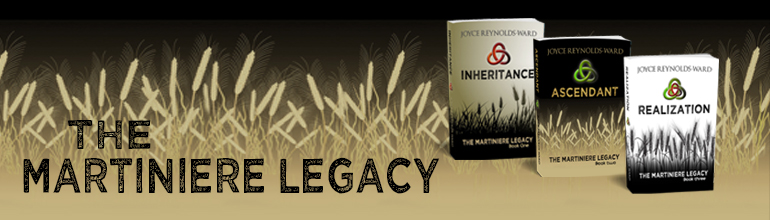
The Martiniere Legacy benefited from my previous experience. There are still small continuity glitches, but the main trilogy–Inheritance, Ascendant, and Realization were planned as a whole and I didn’t release Inheritance until Realization was complete and I’d tweaked things. The later standalone books add pieces to the puzzle, but continuity differences can mostly be explained by different points-of-view on the events.

This year, I decided to embark on what looks like a lot of work–releasing several half-finished novella projects, revising The Netwalk Sequence, writing several alternative world Martiniere books, beginning a new Weird West multiverse project, and planning for the next series of fantasy novels, Goddess’s Vision. I had been muddling along but with the likelihood that Covid restrictions could mean more travel, I realized that I needed more planning and organization to keep things on an even keel.

Therefore, the organization as pictured above. Some serious thoughts about systems. Identifying and organizing long-term publication and promotion plans. Finding tools to make this work easier.

Will it make a difference?

I hope so.

***********

Life in the Shadows, Book One of the 2022 Author Preferred Netwalk Sequence series, is now available for preorder. Official release date is March 17, 2022.

Find it here for Amazon and here for Apple, Barnes and Noble, Kobo, and more.
Comments Off on Some thoughts about writing and organization systems

Filed under Uncategorized

Looking into the shadows

I’m on the homestretch of getting Life in the Shadows revised and through production–all that remains is to proofread the final version in Vellum (which means looking at it in ebook format because that helps identify errors). Proofing this book has been a challenge because it reflects different versions of Word, a dash of Corel WordPerfect, and then the odd formatting that arose from drafting on my old Android tablet.

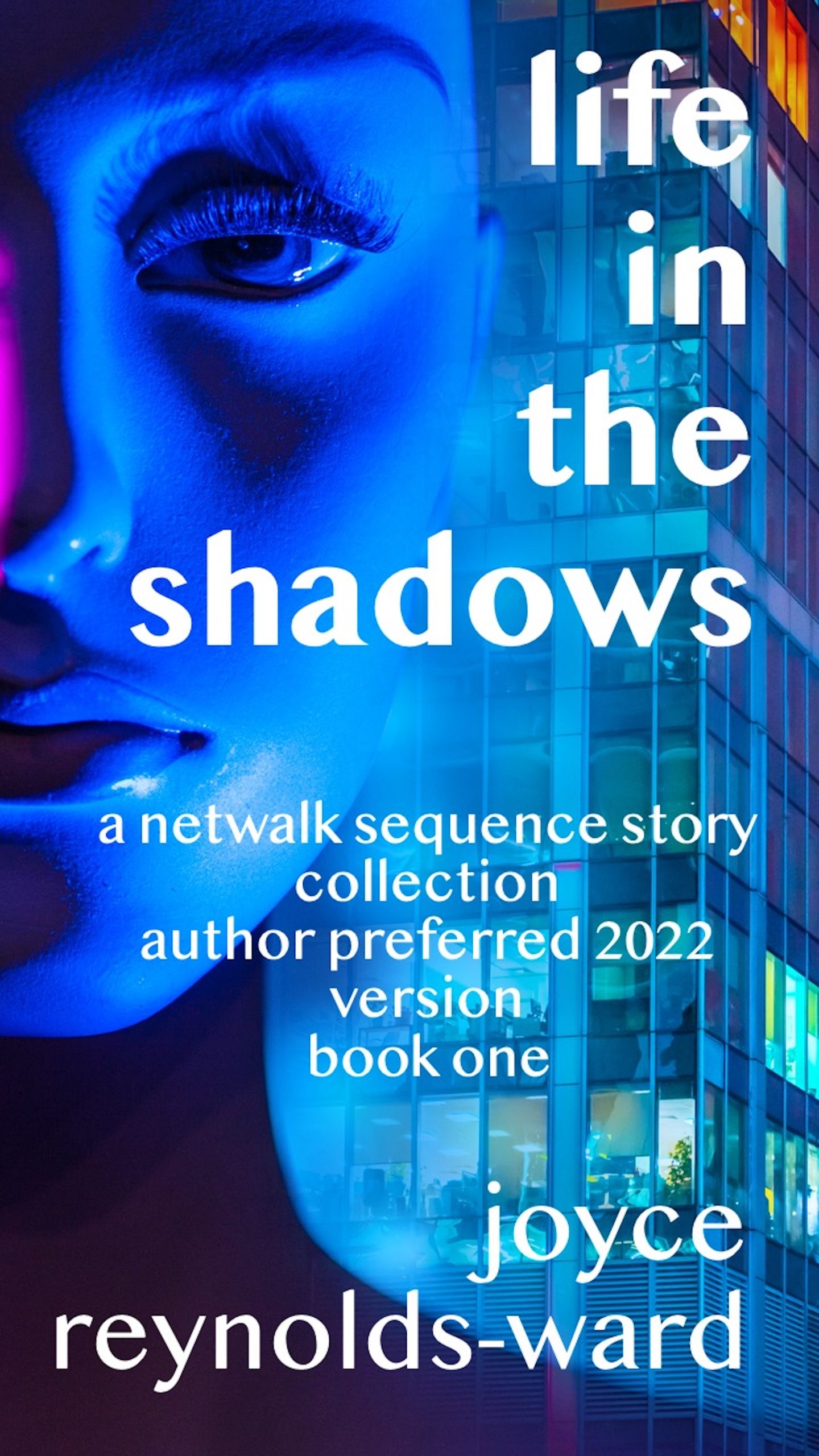
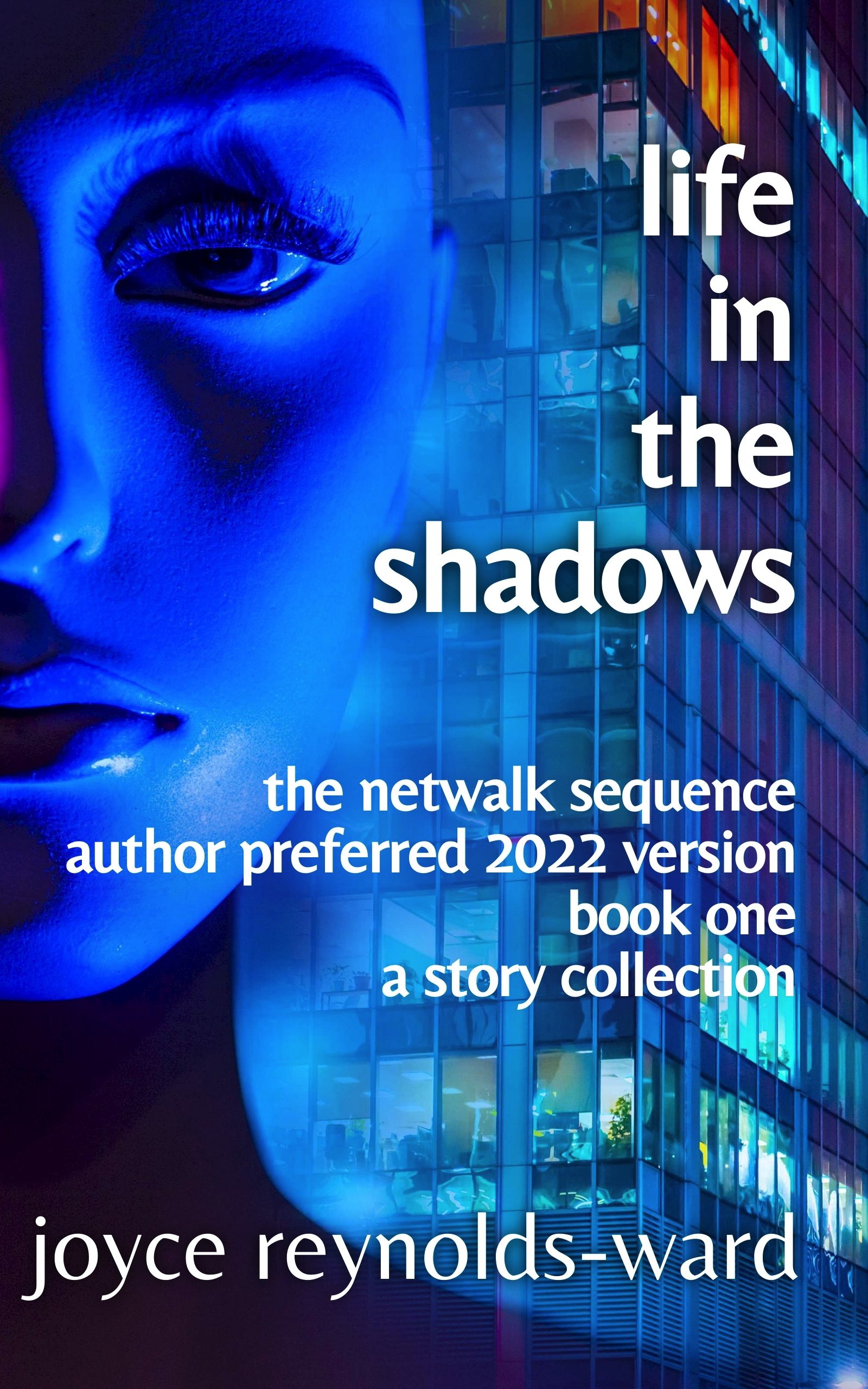
Additionally, I ended up subscribing to Book Brush. The cover above is the final version, and oh my word is it ever easier to work with than any other graphic design program I’ve tried. I almost have the paperback version done. That’s a somewhat lower priority because of the current issues with paper shortages.

However, the book has transformed the series. After I added in new stories, both published and unpublished, I realized that this is really the first book of the Netwalk Sequence, not Netwalk. It chronicles the thirty-some years of the delicate dance between Sarah Stephens and her daughter Diana Landreth, as they collaborate and compete through their ultimately different visions of what the future should be. It lays the foundation for the rest of the series.

Sarah is a political animal and always has been. Politics has wrecked her life more than once, and just because it’s 2075 at the end of the book doesn’t mean that situation has changed, even though she has ascended to the highest pinnacle of power. She knows best, always has, and if people would only listen to her, then the world would be a better place. That includes her lovers Francis Stewart and Anne Whitman–relationships that ended disastrously for everyone involved. The relationship with her ex-husband Dan Andrews. And others, including her son Peter and grandson Andrew.

Diana, on the other hand, is a reluctant politician, unlike her mother. For years her primary focus has been research and development. Her relationship with Will Landreth isn’t exactly easy–Will has plenty of trauma, caused by his resistance to the desire of his father Parker Landreth to turn Will into Parker’s personal assassin, a tool to be used against Parker’s opponents. She loves their children, Andrew and Melanie, and mourns the estrangement from her son as he is drawn into Sarah’s orbit. She regrets the growing separation between herself and Sarah, but–Sarah disregards Diana’s warnings about the indiscriminate usage of nanos as a part of her beauty regime. Among other issues. But Diana doesn’t consider the long-range implications of choosing to develop increasingly intrusive wireless communication implants. She turns a blind eye toward Will’s increasing integration of the Landreth military technology with Do It Right’s bioremediation nanos and biobots.

All the same, the mother-daughter relationship would probably have lumbered along without anything further than occasional flare-ups between Sarah and Diana except for two things.

The chaos caused by the sudden appearance of the Disruption Machine, a war machine-like device that randomly destroys cities with no regard for ideology or political alignment.

The rise of the right-wing, cult-like Freedom Army and its shadowy co-opting of powerful, influential people.

While Sarah and Diana successfully contain the Disruption Machine and are instrumental in creating the protective structures to keep it from falling into the wrong hands (primarily those affiliated with the Freedom Army), the combination of the chaos caused by the Machine–later called Gizmo–and Freedom Army infiltration into power structures shreds the relationship between mother and daughter. That rupture is going to echo through the next two generations of women in the Stephens-Landreth-Fielding family, and the repercussions will be….

Well, the reissued books will be coming out once a month, from now through August.

And, as seems to be fitting for my early work, ten years after original publication, the tone of the damn thing appears to be eerily on point for the times.

Switching to the alternative Martiniere Legacy world and the mainstream Martiniere Legacy world is sweetness and light in comparison.


Comments Off on Looking into the shadows

Filed under Uncategorized

Playing around with cover images and editing–Life in the Shadows


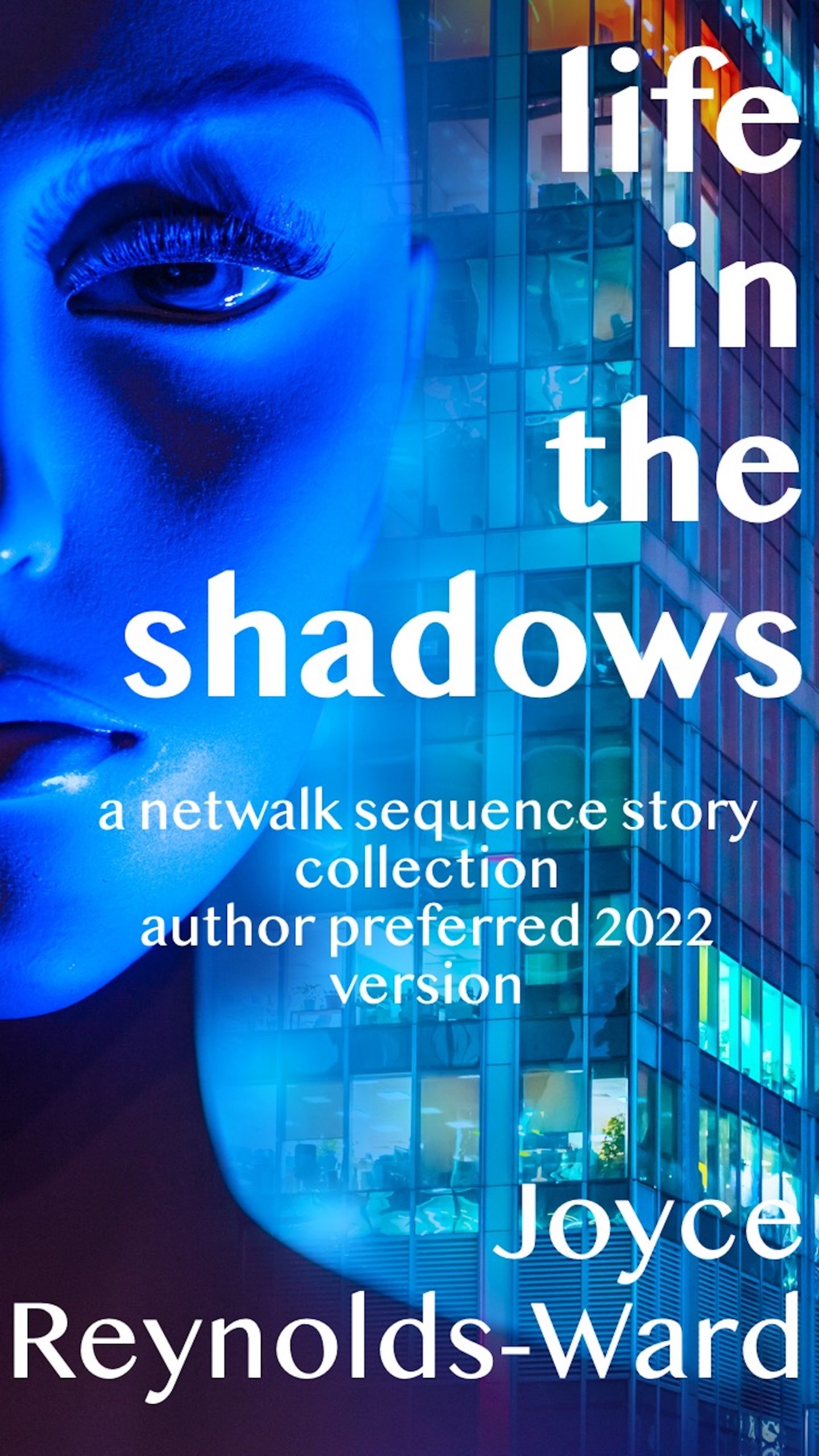
So I’ve been playing around with the Shadows cover, besides working on edits. Running the current cover through Mockup Shots revealed that the first two versions had text running too close to the edge.

Welp, back to the Power Point editing process. The first picture is the current cover, with the addition of “Book One.” I also decided to stick with lower case for my name, because it fits the whole thing.

Edits are progressing in the story, quite happily so. I pulled in snippets from some worldbuilding, unpublished vignettes I wrote before releasing Netwalk’s Children because I was doing a pivot with Sarah’s personality between Netwalk and Netwalker Uprising. Now I’m working on editing the whole thing in Shadows to reflect Sarah’s deterioration before her death, and hopefully foreshadow what happens to her daughter Diana in Netwalking Space. Sarah and Diana are meant to be warnings to their descendants Melanie and Bess. Plus I noticed some huge continuity bloopers in the side short stories–I’m using what I learned from the Martiniere Legacy to deal with those issues (though yes, there are still continuity errors in the Legacy, darn it. Nothing as huge as in the Sequence, however. And the Legacy is also spinning off its own separate worlds–A Different Life is going to be at least two stories of how the Legacy could have taken a different path, and I have notions for at least two other versions. Will I write them beyond the ADL stories? I don’t know).

I may still play around with this cover–it’s a “wait and see” thing. But the discovery that Mockup Shots works well for discovering–well–one little glitch in formatting–is very helpful.

However, I’ve made a major decision about series reordering. Life in the Shadows is now Book One of the Netwalk Sequence, not just a story collection. Because it incorporates the already-published, already-available Winter Shadows and Shadow Harvest (as well as already-published short pieces), I’m still calling it a collection. But there is going to be new material, doubling the book in size, starting from when Sarah issues the ultimatum to Diana to break it off with Will Landreth or else, proceeding right up to the opening of Netwalk (and a little beyond). It’s not the full sequence of events because that would be a much longer book (and it’s already pushing 105K, plus it covers about thirty years of events). However, we get to see snippets of the relationship between Sarah and Francis Stewart. We see Francis’s betrayal of Sarah. The capture of the Gizmo happens in Valentine Disruptions. A mirror version of Sarah’s ultimatum to Diana happens between Diana and Melanie–that’s in vignette form, though I may expand it.

Release date will be sometime between March 15 and 25, depending on editing processes, and it will be available wide. I will be taking down the current version very soon.

Comments Off on Playing around with cover images and editing–Life in the Shadows

Filed under Uncategorized

Fiddling with the Netwalk Sequence re-release

I’m down to the last episode in the latest Kindle Vella story, Becoming Solo, and it just doesn’t want to be born yet. So it’s time to switch to a new project…the rerelease of my Netwalk Sequence series.

I’m calling it the “author preferred 2022 version.” One motivation for redoing the series is that I want to promote it, but dang, the tech is so out of date. Like horrifically so. I had not done the amount of research that I have by now (the Martiniere Legacy research really upped my awareness of tech that is also in the Netwalk books). Another is that the covers have five different designs, so there’s no coherent branding. Still another is that the interiors are older, and reflect several different formatters. Plus back matter updates, proofreading updates, continuity updates…yikes, there was a lot that needed work, especially in the first two books. There was a gap in series books where I went back and wrote earlier stories in the series, and it really shows up on a reread, especially the last two books of the series.

Welp, one of the joys of selfpub is that you can go back and fix a flawed work. I had planned to do this last year, but the last three books of the Martiniere Legacy got in the way.

This year, the Netwalk revision is on the schedule. I’ll be releasing one update a month, starting in March.

Yesterday, I loaded pieces of the first book, Life in the Shadows, into Scrivener. It’s pretty raw, but it’s going to be nothing like the original book. The first version was about 60k words, and only had four stories in it. Granted, one of those four was a novelette and another a novella. But it pretty much ended quite a bit before the next book, Netwalk: Expanded Edition.

I looked at what I had, and decided that a.) I have short works that go right up to the opening of Netwalk, b.) it’s time to consolidate the Netwalk stories, and c.) some things got stuffed into Netwalk: Expanded Edition that really needed to be with the first book, not at the end of Netwalk.

The new version of Life in the Shadows is at around 100K words now. I need to go back and do some significant edits, and since it covers a lot of years, timestamps are probably good. But with this edition of Life in the Shadows, there’s going to be a continuity that wasn’t present before. We go from Diana and Will’s first years together (the focus of the first edition) to those first years all the way up to the opening of Netwalk.

Also, while I was putting together the publicity slides for Justine Fixes Everything, I stumbled across a series of photos on Depositphotos that will work just perfectly for the Netwalk book covers. Since Becoming Solo is still being a brat, I sat down to work on the Shadows cover this morning.

I kinda like it.

Comments Off on Fiddling with the Netwalk Sequence re-release

Filed under Uncategorized

Back in the….

I usually don’t get too excited about my dreams. Most of the time, I’ll have recurring scenarios in very similar settings, so I suppose it’s just writer brain putting things together, or else wish-fulfillment of some sort. I didn’t have Covid dreams early on in the pandemic, though those have been popping up with more frequency in the last six months or so–the mask version of showing up nekkid in class for a test, that sort of thing.

And then.

Last night’s dream was straight out of the Boomer-Jones Generation nightmare folder.

Nuclear strike evacuation.

At least it was era-appropriate–Covid was not a concern, so there were no masks. For some reason, we had advance notice, so it was a matter of packing things up and leaving at the appropriate time (which was SO not true back in those days). And this dream didn’t feature the actual nuclear explosion. All very orderly and together, except I was dreaming in detail about the entire packing process. What to take. What not to take.

No kids of my own, and I wasn’t my current age. A maternal, senior figure was present, and there was another family with kids. We had a horse who was vaguely like Mocha, someone else had a cat, and another person a dog. Coordination seemed to be an issue.

Then I woke up. Probably and thankfully before the nuke went off.

I had to wonder about just why this particular past anxiety decided to show up right now. Because yes, when I was younger, there was a lot of nuclear anxiety going on. When I was in elementary school, the school lobby contained diagrams of award-winning school fallout shelter design. I remember my mother emptying out sealed quart canning jars containing water, with a notice from the paper on the cabinet door about how to store it.

But I really didn’t know details about nukes until I was in 6th grade or so. I think that was about the time we had our first Civil Defense trainings that were a bit more explicit about nuclear war and the dangers of it. Being a Jones, I was too young to remember details about the Cuban Missile Crisis (though I clearly remember JFK’s funeral on TV, hearing about it at school–1st grade–and LBJ’s election). When I got to junior high, we spent more time talking about civil defense and I read a bunch of nuke war books, including Alas Babylon, A Canticle for Leibowitz, and others of that ilk. Now some of that may have been tied to a career-military sibling who was, after one tour, involved in infantry things that Weren’t Vietnam, or it might have been just that I was the child of older parents who had gone through WWII, lived in Pendleton after WWII for a couple of years, and as a result I had more concerns about it. I remember the grownups talking about Eugene being a bomb target because it was a major railroad switchyard. Just casual talk by adults, not doomtalking by kids. But us kids were around to hear it.

I remember being afraid that Nixon was going to go nuclear rather than deal with Watergate.

Those fears extended into the Reagan era. We moved to Portland in the early ’80s, which was my first time living around a major airport, and for the first six months I’d startle awake, worried that the airplanes I heard coming in for a landing were actually missiles.

Nuclear fears started fading about 1992 and they haven’t really been a part of my dreams or even conscious thought since then.

So where the hell did this anxiety dream come from? Concerns about the events in Ukraine, or something else?

Writer brain processing a story it isn’t telling me about yet?

I have no idea. But I’m scratching my head about this particular theme reappearing.

I’m not exactly someone who ascribes significant meanings to my dreams or even remembers their details for long. Still…this one continues to resonate. That’s probably because it hooks back into childhood anxieties.

(Not that I would be inclined to pack up and evacuate these days. Too old to do the survival dance that would require, realistically, and in any case in the dream, I was young enough that it might be a reasonable possibility.)

Strange, very strange. Brain, what on earth are you up to now?

Comments Off on Back in the….

Filed under Uncategorized

Riding the old mare in deep snow

Winter is definitely here, and one way it shows is what the old mare and I go through when riding. I keep her in work year-round, weather permitting, in part because she’s arthritic and in part because she enjoys doing something besides hanging out in the pasture. It’s easier to keep an older horse in light fitness during difficult weather if they’re sound than to let them decondition, then have to bring them back into fitness when conditions improve. Been there. Done that. Barring illness or injury, I’d sooner figure out ways to keep her safely in work.

She’s always been a horse who likes to be ridden, and now that semi-retirement is her gig, she enjoys small mental challenges, light schooling, and–her absolute favorite–road riding over familiar roads where she can snoop on what people/wildlife/livestock are doing. Oh yes, she is definitely a snoopy old lady, and she notices anything new on our rounds.

Some snow years, it never gets much deeper than 8 inches. That’s just about perfect for all three gaits–a bit of work, but cushioning from the hard frozen ground, and I dare say that the old lady somewhat enjoys galloping through snow.

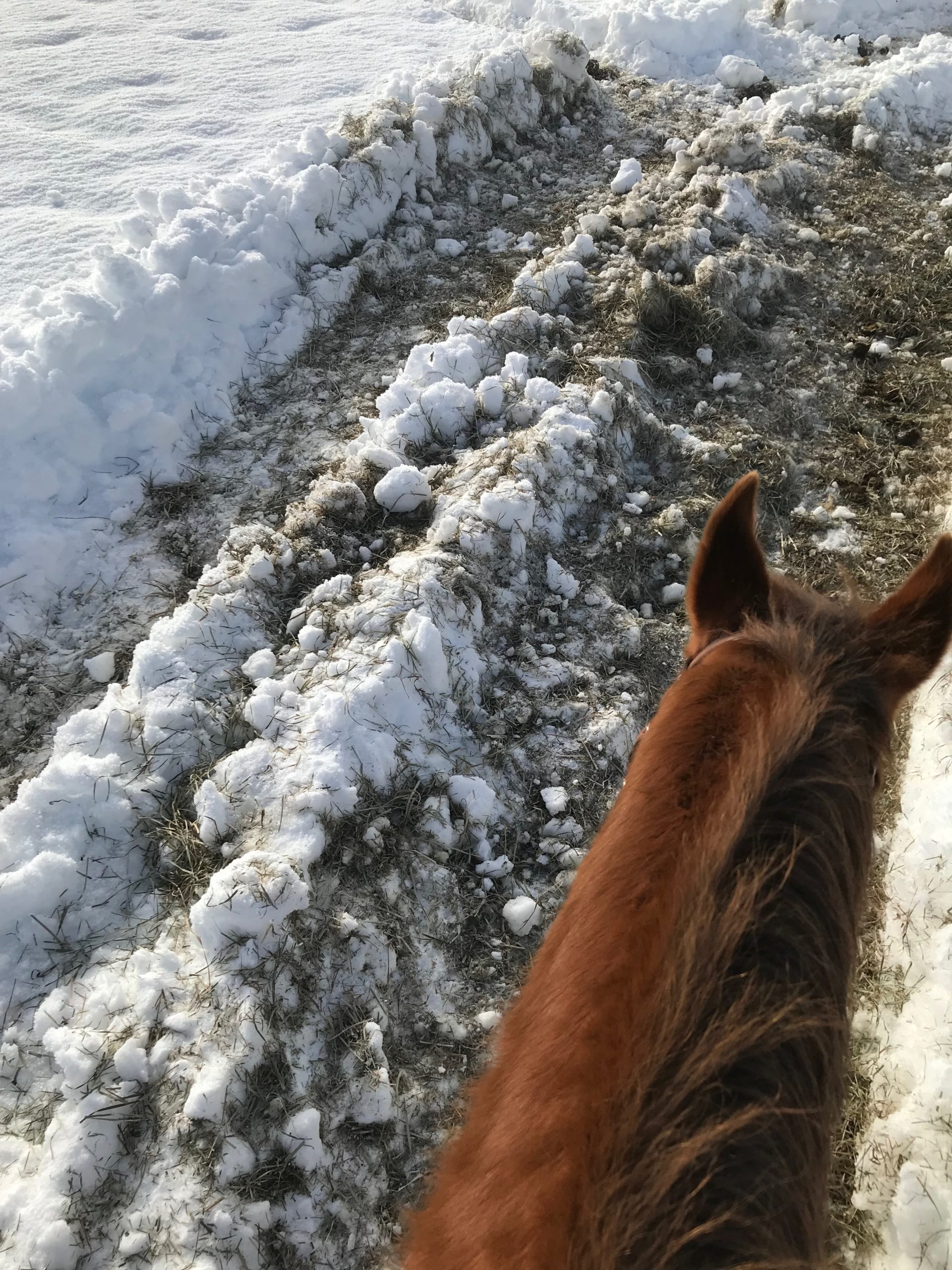
This winter, however, has deep snow. As in 12-18 inches in places in the pasture. The horses–all of the herd–follow trails and tracks. Some are trails that they have made and firmed down through repeated use, especially from the bigger and taller horses. Mocha’s one of the shorties in the field at 14.2 hands high (one hand=4 inches, so she’s 58 inches high). Going through this deeper snow is work for the old lady, so….we follow trails and tracks.

Here’s some perspective on snow depth:

The barn owner uses the backhoe (which delivers the 1000 pound or so bales to the herd) to make safe trails for the horses around the scattered hay. They also plow out sections for the horses to walk. Since they feed in different locations in the 30-acre field, that means Mocha and I can manage to get light walk works in by following the backhoe tracks in areas away from the herd.

We don’t move out of a walk on these trails–the footing is too uncertain. Mocha prefers to move with her head lowered, whether she has a rider or not. But we manage to wind our way in and out through the trails and tracks, including sharp turns to change direction. Mocha likes that, and starts anticipating potential track variations.

Surprisingly, it’s pretty easy to rack up some distance on these circuits. We do five loops in one direction, five in the other.

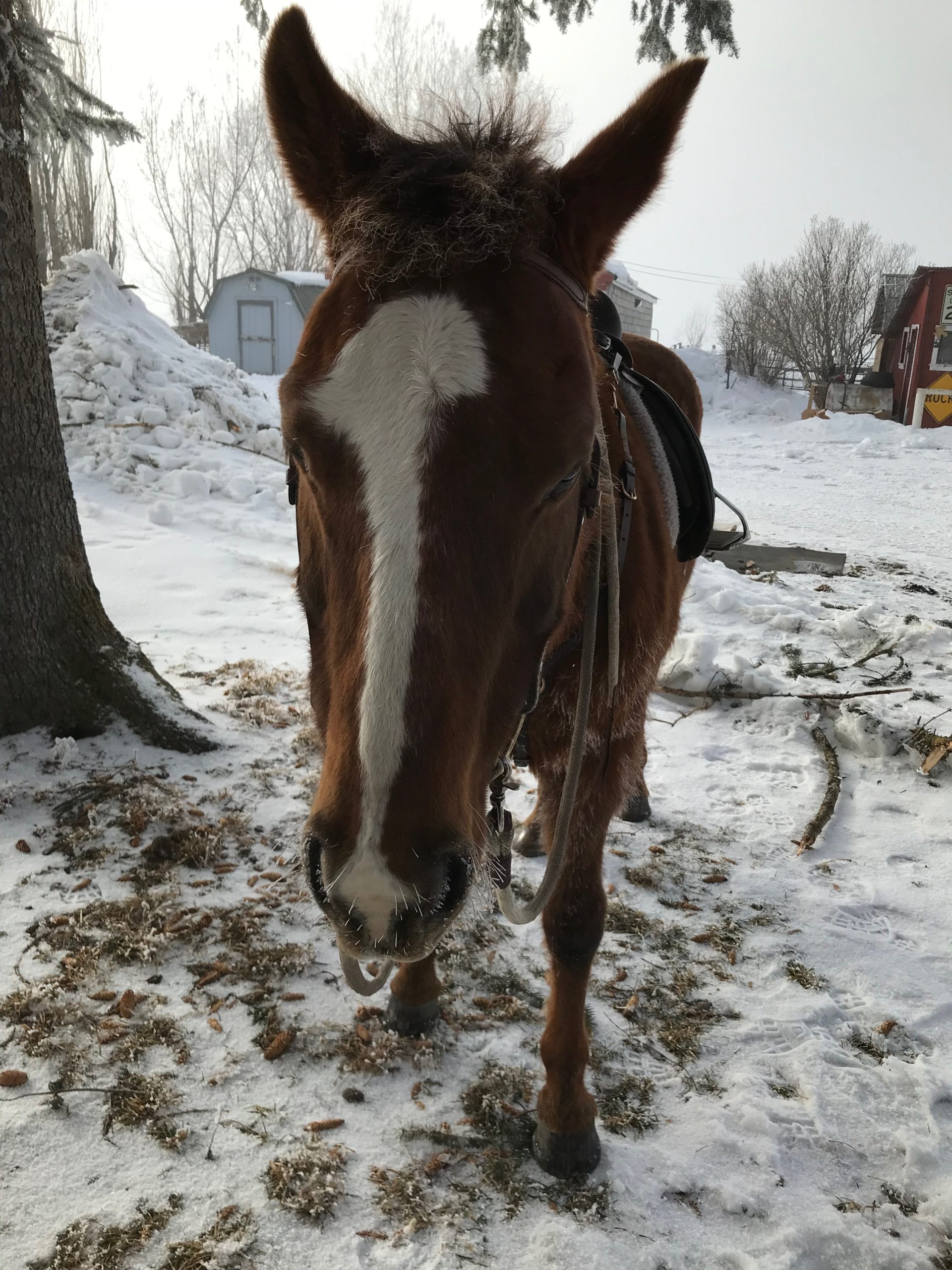
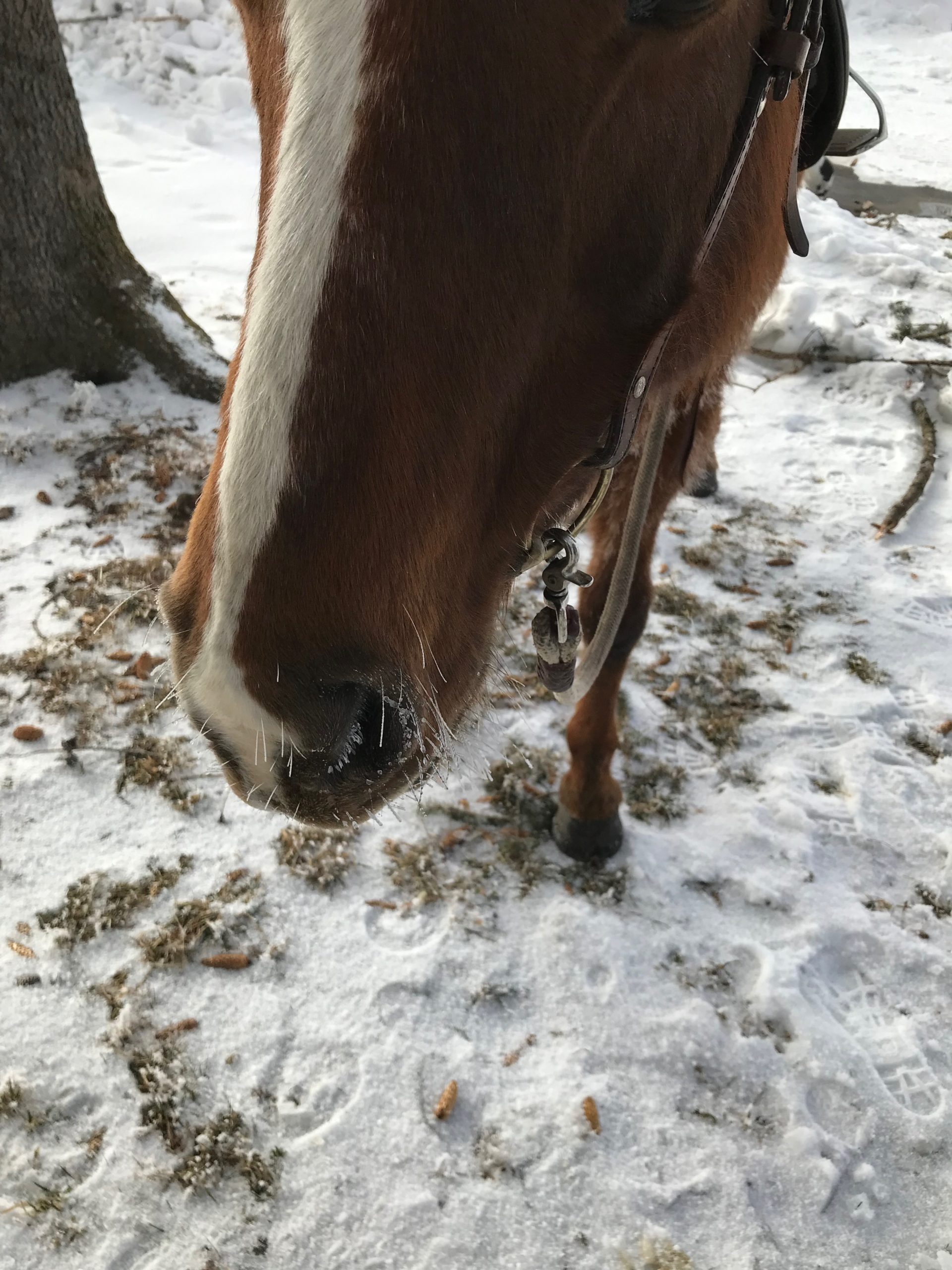
Today, we went for 3.5 miles, according to my phone. All at a careful walk. It was sunny for most of the ride, but then the freezing fog rolled in, leaving its mark on Mocha’s whiskers, chest hair, and forelock. Not sure how well it will show up in the picture, but it’s worth a try.

Besides, you all like Mocha pix, right?

Comments Off on Riding the old mare in deep snow

Filed under Uncategorized

Publicity and Promotion Planning

Illustration of office

Planning promotion; picture by author

Sigh. I’m letting blog topics pile up on me again, but this one mugged me, in part because the event that kicked off the inspiration for this post just happened this morning.

I took a Publicity 101 workshop this morning with Barbara Linn Probst through Jane Friedman. Part of the motivation for taking this class is the ever-increasing need and desire to do promotion and publicity.

I learned a lot from this class, but my primary takeaway was that I really, REALLY needed to think about promoting not one book but my entire collection of work, especially in an era when I’m not certain if or when I will be doing live convention and bazaar appearances anytime soon. Both the husband and I are nervous, plus after a while, the thought of dealing with travel, etc, etc becomes tiring. I’m sure I’ll get over it as Covid finally settles down (and yes, I believe it will settle at some point) but, until then, I’m getting into my mid-sixties and have to think about situations where health and other issues might interfere with my ability to make live appearances.

Additionally, I’m also focusing on organic promotion activities rather than buying ads. Sure, people report large returns from buying ads. BUT. The outlays to get them–and the learning curve–is more than a little bit intimidating.

I also feel like I’ve not maximized my organic promotion potential. What’s in my way? Well, the lack of organization, for one. The inability to easily perform the task. The inability to flat out say that I am doing X today, Y tomorrow, and Z the day after on a regular basis.

See, I know the organic stuff works. I did a wee bit of it as part of the Martiniere Legacy promotion, and just that little bit of effort brought me more sales. However, there’s more to my backlog of work than the Martiniere Legacy. There’s the Goddess’s Honor books. Their sales have sadly fallen off since the Martiniere Legacy came on the scene. I need to make good new promotion for that series. I’m going to be rebranding and reissuing the Netwalk books starting in March. Then there’s the collection of standalone books, including the latest, Beating the Apocalypse, which is now available on Kindle and Kindle Unlimited. The short story reprints. The works-in-progress currently serializing on Kindle Vella and Substack.

But as part of looking up payments and fiddling around waiting for the news of the latest Kindle Vella bonuses, I spotted a listing of my works on Amazon. 40 works.

40 works.

About half of those are anthologies I’m in, and short story reprints.

All the same.

40 works, 20 of which are books.

I should be seeing more sales than I am–and the fact that I’m not is entirely on me, and my lack of promotional work.

That, more than anything else, has kicked me in the butt. Oh, the other piece is that I also plan to update the interiors for the Goddess’s Honor works, as well as the back matter. That could lead to some cover adjustments for the paperback copies, but…it’s time for me to get organized on the promotional stuff, and get a system in place.

At the moment, what I’m considering is the following:

Create comprehensive landing pages that cover the Netwalk Sequence series, the Goddess’s Honor series, the Martiniere Legacy series, the standalone books, the reprint short stories, and the serialized works-in-progress.

Make a set of images that relate to and describe each piece of those categories.

Rotate through the categories each week, with a seventh category–New Release Week, which will be the last week of every month–for 2022.

Make a schedule, and then DO IT. Get promotion to become part of a routine, so that it’s easy.

Therefore the picture above. Four pages of notes and planning, with some action items. The area pictured is my planning and handwriting desk space (my computer lives on a second desk; I need both spaces for optimal production).

I’ve been half-assing this promotional work for a while. It’s time for me to get my act together, and be productive, right? Not beat myself up trying to implement it all at once, but bite it off in small, doable chunks. Give myself several weeks or months to fully implement it.

There’s also an ulterior motive for me to write about this in a blog post–if I do this, then hopefully I’ll keep myself accountable and actually DO IT. Especially if I keep scheduling accountability reports…or at least, that’s the hope.

We shall see.

Comments Off on Publicity and Promotion Planning

Filed under Uncategorized

The range of clothing choices

(Surprise! No writing rant this time, just maundering around about clothing choices.)

One of the reasons I roll my eyes at the standard downsizing advice to “discard anything you haven’t worn in the past year” is that I’ve found I switch out my fashion choices not just by season but by year. Some years, I’ll prefer a particular set of winter clothing. Other years, something else. It’s kind of annoying to be expected to switch things around and keep buying new stuff just because I don’t choose to wear the same items from year to year.

A lot of this range has to do with the way the different seasons manifest themselves here in the Pacific Northwest, as well as where I’m going and what I’m doing. Things change from year to year, as does my mood. Mind you, I’m not talking about a huge amount of clothing that I keep. I try to buy quality, for the most part, and rotate through seasonal bins, some of which cross over (fall/winter/spring, spring/summer/fall). It all depends on what kind of season we’re having.

The other piece? If I get rid of something because I’m not wearing it right now, inevitably, a few years down the road I’ll want that clothing item again, and where on earth can I find it? Nowhere.

For example. Turtlenecks in winter. A few years back, I decreed no more turtlenecks and disposed of most of mine, I’m not sure why. Then, a couple of years later, I found myself wanting to wear turtlenecks in the cool seasons again. But finding them…arrgh. I finally ran across a couple in a thrift shop and bought them. Learned that lesson.

Or unstained short-sleeved crew neck blouses in spring and summer. I got caught out on that one last summer, due to heat and the need to come up with ensembles that might work for urban exposure. Sure, I have a lot of t-shirts, but they just weren’t gonna work for this situation. Most of what I had on hand had been relegated to hiking, horse work, wood hauling, outdoor chores–and they had acquired various stains (welp, being–ahem–rather busty, The Shelf, as I call it, tends to catch food. Another source of stains, no matter how much care I take).

Some years I wear jeans all the time, winter, spring and fall.

Others, I wear skirts and dresses around the house and for non-outdoor, non-hiking, non-horse activities.

I have several pairs of leg warmers. Most of the time, they languish in the drawer during winter. This past winter, suddenly I’m wanting to wear them on a regular basis.

What I have done in my sorting is culling uncomfortable items, high-maintenance items that don’t serve a particular purpose, and items that fall into the fast fashion, absurdly stylish range. Though I have regrets in that area as well (such as disposing of some much-loved color block sweaters and t-shirts).

But getting rid of something just because I haven’t worn it in a year or so?

Guaranteed to be something I want to wear within a year.

Ah well. Now that I live a significant distance from temptation, and Covid has restricted my shopping, I’ve found that rotating clothing between seasons is enough to give me joy.

And I can comfort myself with the realization that I’m no longer being a slave to fashion.

Yay?

Comments Off on The range of clothing choices

Filed under Uncategorized

Another writer behavior rant–inflating credentials

All right. I really wasn’t planning to do another writer rant this soon after the last professional behavior one.

And then I saw a prime example of a behavior I really, really dislike on Twitter this morning.

A writer with “USA TODAY bestseller” in their bio showed up in someone else’s comments and started–ahem–mansplaining, combined with gaslighting. It was a political thread, nothing to do with publishing, and they started throwing off standard red flags that indicate that they’re, um, kinda stereotypic in their views about women and what women are attracted to in a man (specifically, that women are turned off by men who cry). Person got more and more defensive, accusing the women who said that said person does NOT speak for all women, and, well…

But that’s not the source of my rant, though it’s probably a good thing for said person that they weren’t engaging with romance writers, especially Romancelandia. If that person thought they were getting raked over the coals by us, then Romancelandia–especially since said person writes romance (and whose Big Book falls in the Nazi redeemed by Jewish girlfriend genre) would have really given said person a hard time.

The source of my rant is the claimed “USA TODAY bestseller” in the person’s bio.

I looked it up. Near as I can tell, the work that got that title?

AN ANTHOLOGY.

Not the person’s short story in that anthology. The entire anthology. I skimmed through that person’s website, and the publisher listed? One of those packagers that claims they screen all submissions and only take a certain percentage of the best (but as near as anyone in publishing who follows these issues and these packagers can figure out, that has more to do with “how much money can you spend” than anything else).

Sigh.

Perhaps I’m just overly scrupulous. By this person’s lights, I could claim more critical acclaim than I currently do. I’ve been in critically acclaimed anthologies. Heck, some of my work has briefly flirted with Amazon bestseller status. But I don’t make a big deal about it. Why?

Because while all of those wonderful, marvelous placements give me joy, they are not the Big Ones. Because I know too much about what is involved in earning such titles than to stuff them into my short bios. Well, I’ve taken to trumpeting the Writers of the Future and Self-Published Fantasy Blog-Off semifinalist placements in my long bios, along with the Anthology Builder Finalist, but those are all for standalone works, not anthos. One antho I was in earned an USA Book Award accolade; another was an IPPY finalist. Another was recently ranked as Best Short Story Collection of the Year by the Fantasy Hive. I’m sure there’s some that I have forgotten, but oh well.

These placements give me joy, but do I think they make me something special?

Not really. I’m a decent writer, the hybrid/self-published version of a solid midlist writer in traditional publishing. I turn out decent stories but nothing that is of the ilk that propels me out of the rank and file into greater visibility. I’ve made peace with myself about that. It’s just the way things are. I have fans who appreciate my work, and that’s great.

However.

There tends to be a common thread amongst writers who play up and inflate their award credentials.

First of all, they tend to be amongst the aggressive and poorly-behaved writers who take offense if their pronouncements are challenged, even outside of their particular areas of expertise.

Second, they tend to–um, well–spend more time promoting themselves than actually writing.

Third, they expect–nay, frequently demand–recognition that doesn’t match their performance.

And finally, in the long run, they end up flouncing off, grumbling because we don’t acknowledge them as wonderful, marvelous, and the final authority.

One of the prima donnas of publishing, in other words.

In this case, the person deleted their Twitter account after complaining about how mean we wimmens were. But I’ve had similar encounters with women writers, predominantly on Medium. In those situations, the people involved made a big fuss about their prominence, their awards, their recognition.

However.

A quick surf revealed that neither writer had a significant presence OFF of Medium.

Prima donnas.

They come in all varieties, for sure–and they sure aren’t pretty.

And I do my best not to be one of them–which starts by not describing myself as an “award-winning writer.”

Gimme a Hugo, a Nebula, or something of that level?

Then I’ll beat my chest about what I’ve done. Otherwise?

Nope.


Comments Off on Another writer behavior rant–inflating credentials

Filed under Uncategorized

Professional behavior amongst writers

A view of my office setup….

I confess to a particular perspective when it comes to contemplating professionalism in any career. Years ago, when I was majoring in Recreation and Park Management, one of our instructors gave us a stern look and firmly said, “Always act like a reasonable and prudent professional.”

She strongly stressed the reasonable and prudent aspects of the phrase, and I’ve found that this attitude works very well in all phases of any career.

I guess that’s why I get so gobsmacked by what I consider to be non-professional behavior amongst certain prima donna sorts of the writing profession–a behavior which is not limited to those who have perhaps earned the right to behave as if the world owes them fealty.

One thing I learned early on as a writer is that the writing world, especially once you establish yourself in one corner of it, is very, very small. If you’re dealing with traditional publishing, especially in these days where the Big Five are careening toward becoming a single entity, this is particularly true. Editors, other writers, and agents gossip. There’s a quiet list of people who are difficult to work with–for whatever reasons. Talent can only carry a person so far, and I do know of situations where a more work-focused writer has nabbed publicity slots made available by the failure of a more-acclaimed and less-reasonable author to make their deadlines. But even in self-publishing you run into the situation where you can earn a bad reputation by not fulfilling obligations and promises.

So meeting deadlines unless you’ve been hit with health or family issues is one aspect of being a professional writer. Doesn’t matter if those deadlines are self-imposed or external. They count.

Prudent also applies to how a writer treats other people. There are, unfortunately, a set of writers out there who are a.) extremely competitive and view writing as a competition and b.) believe that acting like an edgelord and attacking/mocking others gains them more visibility and more eyeballs. This perspective isn’t just limited to up and coming writers. We have many sad examples of award-winning, best-selling writers who behave in this manner. Or of cliques of writers who band together to mock someone’s behavior for…no real reason, except to mob someone they want to exclude.

Problem is, such behavior, especially when it is punching down on someone who isn’t as prominent, or is attacking entire subgroups of people, ends up backfiring in the long run. There’s one best-selling author who I won’t name (unnecessary,  honestly) who has done serious damage to their reputation and continues to do so. That person is sufficiently prominent that they will probably never come face-to-face with the consequences of their stance, but–they’ve lost readers and future sales.

Sniping and attacking others in a failing attempt to elevate their own visibility is a frequent tactic used by writers who view most, if not all, other writers as competitors. Or they see themselves as gatekeepers of a sort. This is a kind of behavior that can be encouraged by participation in certain types of critique groups, where tearing apart others’ work is seen as a virtue. I’ve seen it in action too many times.

I have problems with the competitive attitude toward writing, in spite of being part of several competitions and having earned a couple of semifinalist placements.

First of all, no one develops their writing skill in a vacuum. NO ONE.

Secondly, each writer has an individual voice, and your reader may not be my reader. Or your reader may have consumed everything you’ve written, and will be happy to find other writers who resonate with them.

Thirdly, I have found that a cooperative attitude opens a lot more doors than a competitive attitude. I’ve personally found more opportunities and advancement through cooperation with others.

Nothing in particular has kicked off this particular set of musings–just a number of incidents over the past year, some personal, some observed. Am I perfect? Oh hell no. But as part of my striving to be a better person and better writer, I’ve found that cooperation goes one hell of a lot further than competition in the writing world.

The thing to keep in mind is that we are a community in the long run. Someone helped us get to where we are now–and once we’ve achieved a modicum of success, it behooves us to help others.

Because you never know. That beginner you help today?

Might end up making it big, and giving you a much-needed opportunity in the future.

One never knows.

Comments Off on Professional behavior amongst writers

Filed under Uncategorized