NIWA Spring Blog Tour #5–The TANSTAAFL Press Philosophy of Publishing, by Thomas Gondolfi

This is the fifth in a six-week blog tour series for the Northwest Independent Writers Association. You can catch up with them at https://www.niwawriters.com/

The TANSTAAFL Press Philosophy of Publishing – The Golden Rule

by Thomas Gondolfi

Let’s be honest with ourselves – many large publishing houses take advantage of basically everyone in their ecosystem. They use the slush pile to get intellectual property (IP) cheaply. They use their size and segment share to pressure vendors, distributors, and sellers to do as they want. It’s a nasty fact of life. Almost all authors know it but with little other choice are forced to run the gauntlet in hopes of grabbing the brass ring. Smaller publishers don’t have that level of power. They can still be predatory or just dirty using contracts to steal IP, lawyers to threaten litigation, or even take money from unsuspecting authors. I didn’t choose the name of my publishing concern by rolling random numbers. TANSTAAFL Press*, by the very nature of its name, wants to give a fair deal to the authors, vendors, and the customers.

We have all heard of the Golden Rule – do unto others as you would have them do unto you. As a hybrid publisher, I feel that I need to not only follow this rule but be held up as an exemplar in all facets of the business.

Let’s start with the authors, shall we? I try to give new authors, not established ones, a voice by publishing their exceptional works. It takes a bit of extra effort to find those whose work I love, but it is worth it. Along the way, I can assist other authors who aren’t quite there yet, all in a way that I’d like to see, such as personalized rejection letters that encourage more submissions.

Contracts or publishing deals are made as fair as I possibly with none of this “take it or leave it” BS that many big publishers do. In generating our standard contract, I pulled in as much of the SFWA contract as possible. Then I leavened it with what I would want to see if I were to sign a contract. You can see it at https://tanstaaflpress.com/wp-content/uploads/2015/06/TANSTAAFL-Publishing-Contract-START.pdf. On a simple reading, many things will stand out in my contracts vs. those of other companies. I am proud of several of these. Royalties go up rapidly for sales over a set amount. There is a termination date or sales numbers where the author gets his / her rights to the book back. Most importantly, the contract is only a starting point that I encourage the author to input toward customization. The idea in my mind is a fair deal for everyone.

Education: If someone feels like they want to go down the publishing path themselves, I’m more than happy to provide my experiences and advice – for the most part, gratis. I write books, give seminars, working on a community college course, and just sit down to chew the fat with folks about writing and publishing. My reward for most of that is indirect, kind of like the reward for being a parent. Seeing the recipient of your knowledge avoiding your mistakes is golden.

I try to apply the Golden Rule of fairness to vendors I work with. If I think they are asking too little, I make them accept more (has happened more than once). If they do something exceptional (like help me get something done faster when I’m in a schedule crunch), I’ll throw them a bonus. I always offer the names of my vendors when asked and often publish them in my works. Conversely, when something doesn’t feel fair to me, I move on to a vendor that does. BUT, don’t assume a significant dollar figure means something isn’t reasonable. Factor in how many hours it would take them. What specialized equipment or training did they need to pay for? Then figure out how much per hour it cost. With that knowledge, could you make a living on that much money per hour?

Customers get our works at the same or lower prices than those of a traditional publisher, even if the cost to produce is higher. I can do this primarily because I take a higher risk and my payroll is significantly lower. I often throw in discounts for those who buy multiple books or an entire series. Wins for everyone.

By putting yourself in the shoes of the other party, it becomes easier to decide if any deal is fair. Don’t sell your work short, nor the risks you are taking investing money. At the same time, don’t assume you are someone that deserves a champagne fountain at every luncheon because you can get a book into print. Turn the deal around. What you will get in return for this mental exercise is a group of faithful, long term relationships AND more that would be eager to do business with you.

===

* – TANSTAAFL – There Ain’t No Such Thing As A Free Lunch

Thomas Gondolfi founded TANSTAAFL Press in 2012. He is a book parent of the Toy Wars series, the CorpGov Chronicles, and Wayward School, along with numerous other writing and editing credits, which can be found on www.tanstaaflpress.com. He is a father of three (real children), consummate gamer, and loving husband. Tom also claims to be a Renaissance man and a certified flirt.

Raised as a military brat, he spent twenty years of his life moving to a new place every few years, giving him a unique perspective on life and people.

Working as an engineer in high tech for over thirty years, Tom has also worked as a cook, motel manager, most phases of home construction, volunteer firefighter, and the personal caregiver to a quadriplegic.

Comments Off on NIWA Spring Blog Tour #5–The TANSTAAFL Press Philosophy of Publishing, by Thomas Gondolfi

Filed under 2020 NIWA Blog Tour

NIWA Spring Blog Tour, Week # 4–The Author Community, by William Cook

The Author Community


This is the fourth in a six-week blog tour series for the Northwest Independent Writers Association. You can catch up with them at https://www.niwawriters.com/


We are a strange group, we writers who consider ourselves “the author community.” For the partners and spouses of writers, I’m sure that sounds like an understatement. After all, they’ve lived through the sudden 3:00 AM awakening of their writer, who exclaims, “I just figured out the ending to my story, but I have to write it down now before I go back to sleep and forget it!” They’ve endured the heartbreak of watching their author mope around the house for days after a tepid two-star review on Amazon. They can’t forget the jubilation when their partner shouts, “I just sold my first book to someone who isn’t a family member!”

How did we become members of this independent author community? Some, with an abundance of self-confidence, identified themselves as authors when they first put pen to paper or fingers to keyboard. Others felt inducted into the group when they typed “The End” upon the completion of the first draft of a short story or a novel. For poets, it was writing that final line of the last stanza. Still others didn’t identify themselves as authors until their short story got published in a magazine or anthology, or their book appeared on Amazon or Barnes and Noble. And then the fun really begins!

I had no inkling of an author community as I was writing my first novel. All I knew was that I had a story inside me that would make me burst if I didn’t get it out. But once it was out, then what? I have a friend who spent a year unsuccessfully trying to woo a literary agent into taking on his project. Another friend told me, “Just publish it yourself.” Ultimately, that’s what I did—full speed ahead, damn the torpedoes.

Once I decided to publish independently, doors began to open. The author community seemed to come out of the woodwork and welcome me into its ranks. Who knew there were groups of independent authors all around me, eager to greet me, to support me in my efforts, to help me improve my craft?

So as strange or as downright weird as we may each be individually, our group is united in its passion for all forms and styles and genres of writing. We share what we’ve learned on our personal journey, cue others to upcoming workshops and conferences, offer critiques and beta readings to hone the skills of our colleagues, act as cheerleaders when we read other indie authors and post reviews on Amazon and Goodreads. We share an identity that is as exciting as it is sobering. We know we must promote the highest standards of professionalism so independent authors are not regarded as somehow inferior to those published by the big houses.

In fact, I’ve decided that what I like best about being an independent writer is this connection with others like myself. Interestingly, the author community is both real and virtual, with physical meetings as well as online Facebook meetings. I am certain I would have made very little growth as a writer without these groups having my back.

I cannot remember exactly how I stumbled upon Willamette Writers, a statewide group of authors with local branches all around Oregon. In thinking about it, it may have been my daughter-in-law, a passionate community organizer, who pointed it out to me. The Salem branch of Willamette Writers meets monthly. In addition to giving a forum to members for promoting their books, the group hosts a guest, who gives a presentation about various aspects of the craft. During one session, a professional editor instructed us in the fundamentals of self-editing. There have been conferences on building story arc, writing realistic dialogue, character development, point of view—in short, topics designed to improve our skills. There was even a session that featured a local literary agent, who highlighted the nuts-and-bolts of seeking an agent for those inclined to do so.

Willamette Writers is probably best known for sponsoring its summer writing conference in Portland. This is a national event that hosts a large program of workshops, as well as a bevy of literary agents who make themselves available to hear pitches and proposals from attendees.

Closer to home, my wife spotted a small ad in the Statesman Journal, Salem’s local newspaper, several years ago about a weekly group that calls itself WYTT—Writers Yesterday, Today, and Tomorrow. This is a group of independent authors at every level of skill, from those who have already published one or more books, to those who are just turning their talents to writing and are eager for feedback. What is special about it is that everyone must read from their works aloud, after which the other members give feedback. I have found it to be extraordinarily helpful.

Given the number of members who often attend WYTT and the time limitations that imposes, it soon became clear to me that a smaller critique group would also be essential. Branching off from WYTT, we now have a group of five who meet monthly. We provide hard copies of our material to each other, and then read that material aloud. In this extended format, more in-depth criticism is possible, including developmental editing as well as some copy editing.

On the virtual front, I am a member of the Northwest Independent Writers Association. Although it was started by a small group of like-minded folks years ago at OryCon, Oregon’s annual science fiction and fantasy convention, it is open to all genres. It is a Facebook group dedicated to improving the skills of its members as well as improving the professionalism of independent writing overall. Need a cover designer? A good beta reader? A venue to promote paperback copies of your books? Help with self-editing? Ideas about marketing? Someone in NIWA knows, and is eager to share that knowledge with you. NIWA also publishes quarterly catalogues of members’ books, a great way to advertise our newest ventures, as well as to provide our portfolio to prospective fans. I am especially pleased with the annual NIWA anthology, a collection of members’ short stories around a particular topic. Last year the topic was “Doorways.” This year it will be “Escape,” to be published in November.

These are only the tip of the iceberg. There are writers’ groups out there which meet in almost every town. Some are specific to genre—groups for authors of romance or mystery or science fiction or horror. There are groups for promoting literary fiction, poetry, and nonfiction. There truly is a flavor for everyone. If you’re a new writer or a seasoned veteran, have a taste!


Other posts in this series by this author:

https://authorwilliamcook.com/blog/   “Reading to Impact Your Writing (And Can Watching Movies be a Business Expense?)” March 29-April 4.

www.conniejjasperson.com   “Advice for New Writers” April 5-11.

https://lecatts.wordpress.com “My Approach to the Writing Process” April 12-18.


Watch for the next post in the series by this author:

www.tanstaaflpress.com/news/ “Self-Editing, Grammar, and Beta Readers” April 26-May 2.


William Cook moved to the Pacific Northwest from the East Coast in 1989, and worked for a total of 37 years as a mental health therapist until his retirement in 2011. He splits his time between writing, babysitting for his 15 grandchildren, and sneaking off to mid-week matinees (when theaters are open!). The Kindle edition of his latest book, Dungeness and Dragons: A Driftwood Mystery, is available now for pre-order and will be published on April 24. Find all his books at:

https://authorwilliamcook.com/


Comments Off on NIWA Spring Blog Tour, Week # 4–The Author Community, by William Cook

Filed under 2020 NIWA Blog Tour, Uncategorized

NIWA Spring Blog Tour Number Three –An Editor’s Advice to New Writers–Connie Johnson-Jasperson, Guest Blogger

An Editor’s Advice to New Writers, by Connie J. Jasperson


This is the third post in a six-week blog tour series for the Northwest Independent Writers Association. You can catch up with NIWA at https://www.niwawriters.com/

~~~

New writers embarking on the journey of learning the craft are bombarded with rules:

~Show, don’t tell,

~Simplify, simplify,

~ Don’t write long sentences

~Avoid vagueness

~ Don’t use big words.

These are necessary rules but can be taken to an extreme. The most important rules are

~Trust yourself,

~Trust your reader,

~Write what you want to read.

Sometimes writing advice is good because beginning authors need to educate themselves in the craft. We must learn how to write lean, descriptive prose, and create engaging conversations.

We must become fluent in the rules of grammar, develop a broader vocabulary, learn how to develop characters, build worlds, etc., etc.

But sometimes writing advice is bad. Taken to an extreme, certain writing advice is detrimental because if a writer isn’t careful, they can end up with an unbalanced narrative.

Good/Bad advice number one: Remove adverbs.

A heavy handed approach turns this advice into nonsense. Words like later and soon are adverbs. The lesson should be, don’t use unnecessary adverbs as they fluff up and weaken prose. Keep those that are needed.

Looking for weak words and phrasing is a time-consuming task. Things to look for and possibly delete or change:

  • Any kind of qualifier or quantifier: just, a little, a bit, somewhat—these are words that show indecision. Powerful prose should not be indecisive.
  • Action-stopping words: started to, began to—these word combinations slow and stall the action. They’re passive, so if you want to write active prose, go lightly with them. Your characters shouldn’t begin to move. Have them move and be done with it.
  • Adverbs are words that end in the letters ly: probably, actually, sympathetically, magically … etc. These are weak, telling words that can be overused. It takes thought and intention to show what you mean in these instances rather than saying it, but it can be done.

Check for weak combinations using infinitives (verbs with the word “to” in front of them). Forms of the word be that you should look twice at:

  1. was being,
  2. has been,
  3. had been,
  4. is being,
  5. am being
  6. about to be (or to be)

The gerund in English is usually identified by the addition of the three letters “ing” added at the end of an infinitive. For example, “to be” is changed to “being.”

In modern speech, expressions such as “can’t stand,” “couldn’t help,” and “it’s no use” are frequently followed by gerunds: I can’t stand running in place.

Why do we look at each instance of weak word combinations instead of deleting them wholesale? Sometimes these words and combinations serve a purpose, which is why they remain currently in use.

We often use them in conversations. They can be overused in the narrative, so check each instance to see if your prose can be made stronger without them. That and very are sometimes essential but can become crutch words, bloating and fluffing word count.

Good/Bad advice number two: Don’t use speech tags.

What? Who said that? Why are there no speech tags in this nonsense?

Getting rid of speech tags for two or three exchanges when only two people are involved in a conversation is fine. However, you need to insert beats (bits of action) to show who is speaking.

When more than one person is speaking, keep the speech tags simple.

Good/Bad advice number three: Show, Don’t Tell. Don’t Ever Show!

It is easy to make your characters look cartoonish by describing their most minute expressions. We must have a reference, a way of understanding what that character is actually feeling beneath those gyrations.

Please, do express the thought process or set up key bits of exposition to convey genuine emotions.

Good/Bad advice number four: Write what you know.

Well, that ruins the fun of writing. Tolkien never visited Middle Earth and never met a dragon. Nor did he go inside a live volcano. However, was in the trenches during WWI, and the horrors he saw there influenced his work.

Our life experiences and interests shape and give power to our writing. Beyond experience, imagination is the source of the story and fuels it.

Good/Bad advice number five: If you’re bored with your story, your reader will be too.

I disagree with that blanket assertion. You’ve been completely immersed in the world of your manuscript for a year or more. Believe me, the hardest part is polishing up the finished product.

The reader will experience your novel as something new. It will be as fresh and engrossing to them as it was to you the day you began writing it.

Good/Bad writing advice goes on and on.

Kill your darlings. Indeed, we shouldn’t be married to our favorite prose. Sometimes we must cut a paragraph or chapter we love because it no longer fits the story. But just because you like something you wrote doesn’t mean you should cut it. Maybe it does belong there—perhaps it was the best part of that paragraph.

Cut all exposition. So, why are we in this handbasket, and where are we going? Some background is essential. How you deploy the exposition is what makes a great story.

Don’t use words ending in “ing.” Don’t be ridiculous. Leading off with gerunds weakens your prose. Overuse leads to run-on sentences and info dumping. Use them appropriately and with intention.

Bad advice is good advice taken to an extreme. It has become a part of our writing culture because all writing advice has roots in these fundamental truths:

  • Overuse of adverbs ruins the taste of an author’s work.
  • Too many speech tags can stop the eye, especially if the characters are snorting, hissing, and ejaculating their dialogue.
  • Too much telling takes the adventure out of the reading experience.
  • Too much showing is tedious and can be disgusting.
  • Know your subject. Do the research and, if necessary, interview people in that profession. Readers often know more than you do about certain things.

Authors must learn how grammar works, and other aspects of the craft. I recommend these three books as the basic reference manuals I most often use and refer to:

  1. The Chicago Guide to Grammar, Usage, and Punctuation, by Bryan A. Garner
  2. The Writer’s Journey, Mythic Structure for Writers, by Christopher Vogler
  3. Story: Substance, Structure, Style and the Principles of Screenwriting, by Robert McKee

I highly recommend investing in other writers’ guides. They’re a good way to learn the many nuances of writing craft. However, they’re written by people who assume you’ll use common sense as you develop your voice and style.

We who desire to learn the craft of writing must have faith in ourselves and apply the advice of the gurus gently. If we instill balance into our narrative, we can produce work that stays with the reader long after the last line has been read.

More than anything, I am a reader. If you write it, I will read it. Go forth and write fearlessly!

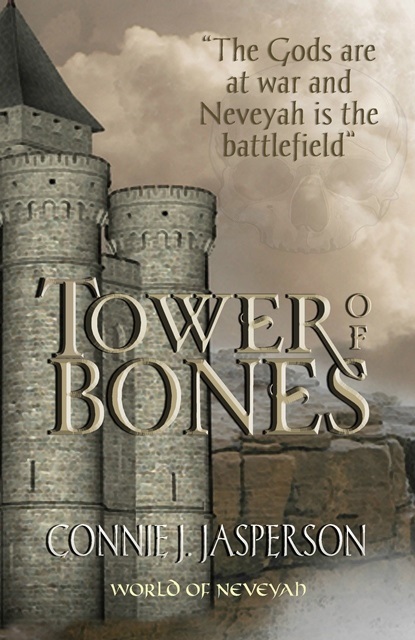
http://www.dreamstime.com/stock-images-fantasy-castle-image11095434


***      ***      ***      ***      ***

Connie J. Jasperson is a published poet and the author of nine fantasy novels. Her work has appeared in numerous anthologies. A founding member of Myrddin Publishing Group, she can be found blogging regularly on both the craft of writing and art history at Life in the Realm of Fantasy. You can find her books on her Amazon author page: http://bit.ly/CJJASPauthor

Follow Connie J. Jasperson on Twitter: https://twitter.com/cjjasp

Comments Off on NIWA Spring Blog Tour Number Three –An Editor’s Advice to New Writers–Connie Johnson-Jasperson, Guest Blogger

Filed under 2020 NIWA Blog Tour

NIWA Spring Blog Tour 2020–Guest Author Mollie Hunt, My Writing Process

#2: MY WRITING PROCESS – INSIDE A WRITER’S MIND, by Mollie Hunt, Cat Writer

This is the second in a six-week blog tour series for the Northwest Independent Writers’ Association. NIWA serves Pacific Northwest writers working to achieve professional standards in independent writing, publishing and marketing.

I was born to write. I love being alone. I love being quiet. I absolutely adore running around inside my head. The only time I’m really at peace is when I’m writing.

This realization didn’t come about easily. In a society that rewards extraversion, I spent years hiding my desire to be left alone. Then one night I sat down at the computer and began to write a story. Forty pages later, I knew I had found something important to my life.

That first forty pages turned into 450, a mystery called “The Oldest House.” I loved the way the story revealed itself to me, taking its own twists and turns. I loved the freedom I felt when I was writing it. When finished, I enthusiastically sent it to publishers and agents and got my first round of rejection slips. That didn’t stop me from writing, just from sending queries. I soon settled into my second mystery, “Broken Roses.”

Noted sci-fi author David Gerrold said in his Worlds of Wonder workshop that the first million words are practice. That sounds like a lot, but if you truly love to write, they just happen. By the time I found myself penning my first Crazy Cat Lady cozy mystery, I had hit that million mark. And I’d learned so much along the way.

I am now working on my 7th and 8th Crazy Cat Lady mystery, and I have the process down. Here’s how it goes:

  1. The initial idea.

The first glimmer of a thought that could be a story that could be a book comes in many forms. It can be a writer’s prompt or something you see at the store. It can be a dream. I often think of a title and work from there. Cat Café was such a story. I loved the idea of cat cafés, and took off from there.

  1. The thrill of the first draft.

Once I’ve got my idea, it’s time to run with it. I try not to think too much as I pen that initial draft; just let the story lead me. I don’t fuss over grammar or wording—that can be fixed later. If I require research, I make a note to come back. This is the fun stuff, riding on the wings of pure creativity.

  1. The work begins: the second and third (and possibly fourth) draft.

Now for the real work, editing and revision. During these run-throughs, I check for flow and continuity, for gaps and discrepancies, for plot holes, and for anything that doesn’t seem right to me. I use an ongoing outline, a cast of characters list, and a note page where I write whatever comes to mind. Yes, I do use color-coding.

  1. The print-out/read-through. (Red pen required)

After all those edits, the manuscript should be perfect, right? Unfortunately it usually isn’t. This is when I print it out and read it out loud to my cats. Seeing the words on paper reveals typos and overused words. Reading out loud shows the flow of the wording. This is especially importing with conversations. Ask yourself, do people really talk like that, or am I channeling Agatha Christie?

  1. The beta readers.

Now that I’ve fixed the problems I found in the read-through, it’s time to hand off the red pen to someone else. As the writer, I instinctively fill in gaps that would be glaringly obvious to others, but another reader will catch those things and more. I have a list of questions for the beta reader to answer once she’s finished reading, such as, “When did you realize who the killer was?” and the ever-revealing, “Did you like it?” (Please, please say yes!)

  1. The editor.

I love my editor. She’s smart, savvy, and knows where to put the commas. Once the manuscript is as perfect as I can hope for it to be, I say goodbye to it for a little while to let her do her magic. It takes time as we go back and forth with questions and comments. Then, voila, it comes back to me a fully formatted book!

  1. Revising with the proof copy.

I publish through Amazon Kindle Direct Publishing because it’s easy and free. I begin with the print version which allows me to order a proof copy. Once the proof is in my hand, it’s red pen time again. In the same way the print-out revealed mistakes, reading the actual book shows up lingering issues. I know we were taught not to write in books, but get over it and use that red pen!

  1. Finishing touches.

There are things a writer must do that go along with publishing, such as cover design, back cover blurb, front and back matter, bio, and links. Blurbs are hard for me, so I often begin working on them long before the book is finished. For Cat Café, I wrote one of my most well-received mini-blurbs though I still had no idea where the story was going: “A body is found in the cat café, and all the black cats are missing.”

  1. Do it all over again!

Congratulations! The book is done and out! Celebrate, then it’s time to get on with the next book.

Watch for my next post, #3: A WRITER’S LOVE-HATE RELATIONSHIP WITH REVIEWS, coming the week of April 12-18 on the William J. Cooke, Notes From A Journey blogsite.

Check out this week’s other participating NIWA blogsites:

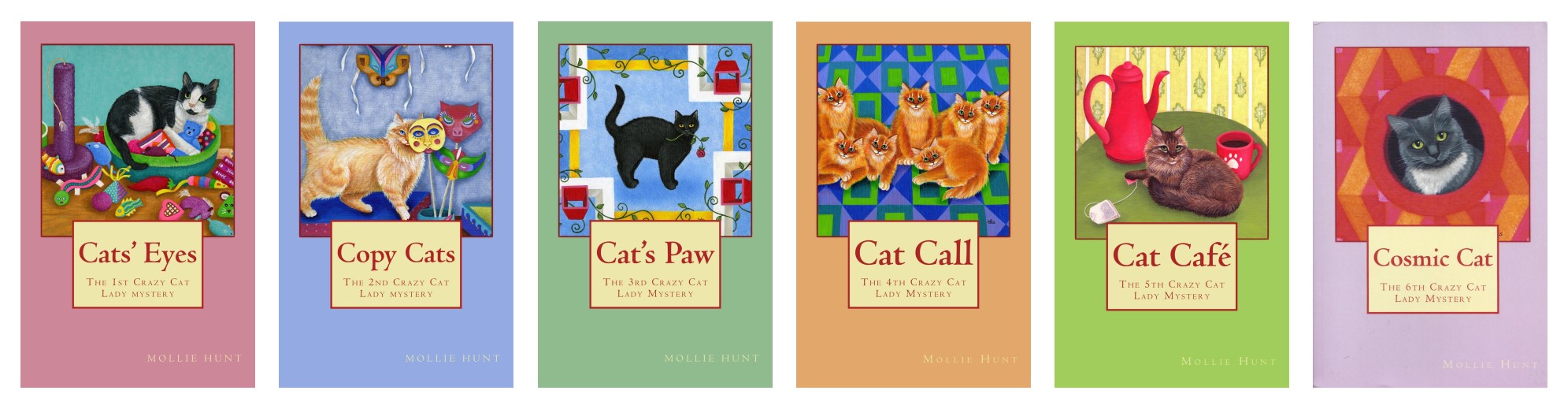
About Mollie Hunt: Native Oregonian Mollie Hunt has always had an affinity for cats, so it was a short step for her to become a cat writer. Mollie Hunt writes the Crazy Cat Lady cozy mystery series featuring Lynley Cannon, a sixty-something cat shelter volunteer who finds more trouble than a cat in catnip, and the Cat Seasons sci-fantasy tetralogy where cats save the world. She also pens a bit of cat poetry.

Mollie is a member of the Oregon Writers’ Colony, Sisters in Crime, the Cat Writers’ Association, and NIWA. She lives in Portland, Oregon with her husband and a varying number of cats. Like Lynley, she is a grateful shelter volunteer.

You can find Mollie Hunt, Cat Writer on her blogsite: www.lecatts.wordpress.com

Amazon Page: www.amazon.com/author/molliehunt

Facebook Author Page: www.facebook.com/MollieHuntCatWriter/

@MollieHuntCats


Comments Off on NIWA Spring Blog Tour 2020–Guest Author Mollie Hunt, My Writing Process

Filed under 2020 NIWA Blog Tour

NIWA Spring Blog Tour–Organizing Your Plot

Organizing Your Plot

Or, How to Avoid the Muddle in the Middle and Not Go Crazy-1

This is the first post in a six-week blog tour series for the Northwest Independent Writers’ Association

One of the epic wars between novel writers is the debate about “plotter or pantser” plot organization methods. Some writers will plan their plots meticulously, to the degree that they write elaborate outlines, synopses, or matrices which chart the progress of their story. Others have detailed backstory notes but once the writing starts, it goes where it flows as they write by the seat of their pants…i.e., the pantser. And then there are those who do a little bit of each. Nonetheless, at some point, no matter which method you use, you have to organize your plot. You need to figure out where your story is going and where it ends.

Generally, no matter whether you’re plotting or pantsing, you’re working with a three act structure or, in some cases, four acts. The first third is the setup of your problem, the introduction of your characters, and learning about the world. The middle third is the march toward the high point of the story. The last third is the resolution, consequences of the high point happening, and either tying up loose ends or setting up the next book of a series.

That middle third of the book is where many writers bog down and where a good plot organization can save your behind. Part of that comes from the tension between wanting to get to that high point NOW and realizing that you have to create all the circumstances that allow you to reach that high point. You have to sustain the plot tension without maxing it out or losing it. But you also need to have that logical progression of events that leads the reader to that high point and then resolution. This is the part of the book that really benefits from a more organized approach.

So how best to organize your novel? There’s all sorts of ways to organize your plots. One structure is to chart out your plot scene-by-scene. This can be as casual as a quick note that “Gerard reaches out to Katy to beg for reconciliation” or as detailed as “Gerard’s POV. Other characters present-Katy, Tom, and Sheila. Action-Gerard begs Katy to come back at Sheila’s birthday party in front of Tom and Sheila. Purpose-Show Gerard’s utter humiliation at Katy’s rejection and the disclosure of her relationship with Tom, to Sheila’s dismay.” Now this is a method I prefer, but I have also written books without going into this detailed a scene outline.

Another method is to focus on certain key points in your story and let your characters guide you through the scenes that get you to those key points. For example, you know that Katy is going to reject Gerard in a quite public manner, but until you sit down and think about the scene, you don’t know that it is going to happen at Sheila’s birthday party and that Tom and Sheila are going to witness it. And Tom and Sheila are husband and wife, so it’s not just Gerard who ends up being humiliated as a result of Katy’s actions. With this method you are focusing on the arc of your character’s experience, how they change and grow throughout the course of the book, and how the story events shape this process.

A third means is to write a synopsis of your novel. Generally you’re not going to do this before you write the book, unless you are already published and pitching a new book via an agent. But it is also a good way to think about your book’s organization. A good synopsis hits the high points of your story, discusses the major plot points and character arcs, and describes the resolution. Most synopses tend to run from three to ten pages.

Still another method is to write specific scenes first and then organize them later, stitching them together in the rewrite phase. So perhaps you might write the ending first, or scenes approaching the high point, or the high point first and work out the rest of the book from there. I’ve never done this but have friends who use this method quite effectively. It just all depends on how your mind works.

Sometimes the nature of a book shapes the degree to which it is organized. For example, Choices of Honor, the third book in the Goddess’s Honor series, simply would not cooperate with my usual plot organization methods. I ended up charting a quick scene list, and that was when I realized that I was biting off too big a chunk of story to put into one book. However, the follow up book, Judgment of Honor, settled right into my scene outline process with no surprises. The Ruby Project: Origins, my current work-in-progress, was drafted off of a synopsis. I pantsed my contemporary fantasy, Klone’s Stronghold, because the protagonist had a very strong voice and opinions of her own about the progression of the story. These are just examples of how I vary my process based on the needs of the book.

Ultimately, the method you use to organize your plot comes down to what works best for you. It doesn’t hurt to play around with different methods when you work on your books and I highly encourage doing so—you might just be surprised at what happens.

Other posts in this series by Joyce Reynolds-Ward (note: each website owner will post at some point during the week listed).

March 29-April 4th—Organizing Your Plot www.joycereynoldsward.com

April 5-11—Self-editing, grammar, and beta readers https://authorwilliamcook.com/blog/

April 12-18—Genre and cross-genre https://tanstaaflpress.com/news

April 19-25—My Approach to the writing process https://varidapr.com

April 26-May 2—Reading to Impact your writing www.conniejjasperson.com

May 3-9—Advice for new writers https://lecatts.wordpress.com


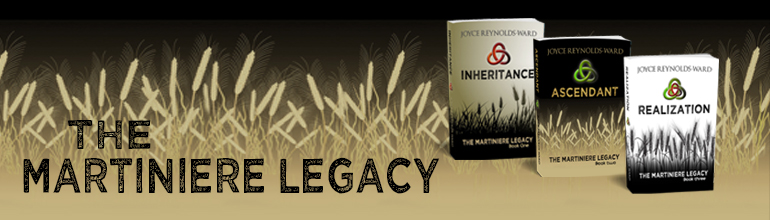
Joyce Reynolds-Ward is a speculative fiction writer from Enterprise, Oregon. Her short stories include appearances in Well…It’s Your Cow, Children of a Different Sky, Allegory, River, and Fantasy Scroll Magazine. Her agripunk thriller trilogy, The Ruby Project: Origins, The Ruby Project: Ascendant, The Ruby Project: Realization, are due for release in November, 2020. Her books include Shadow Harvest, Choices of Honor, Judgment of Honor, and Klone’s Stronghold. Joyce has edited two anthologies, Pulling Up Stakes (2018), and Whimsical Beasts (2019). Besides writing, Joyce enjoys reading, quilting, horses, and hiking, and is a member of Soroptimist International of Wallowa County.

Comments Off on NIWA Spring Blog Tour–Organizing Your Plot

Filed under 2020 NIWA Blog Tour

Work-in-progress musings

So while I’ve had some down time after finishing The Ruby Project: Origins, I’ve been thinking very hard about character series arcs for the three Ruby books. Usually this involves sitting alone in the living room after hubby’s gone off to bed. I’m sipping on a shot of whisky or something of that ilk, and just letting my thoughts wander.

This project is the first time that I’ve tried writing a complete series before marketing or release. Back in the day, writers were discouraged from such behavior. You wrote the first book, then started shopping it around while writing something unrelated. But these days, especially in the era of self-publishing, one of the recommendations is to get a series written, then release it all within short intervals. Both of my existing series, Netwalk Sequence and Goddess’s Honor, were first written during the old days. Both series expanded further than I expected, probably because they were written over a span of years. In this instance I’m going to go ahead and write all three books before releasing the first one. I’m thinking it could be easier than writing a series over a span of years, especially since this is one that wants to be written in a white heat.

Not that this means the series is going to lack depth, at least judging from what I am seeing as I develop these character arcs. Along with the agtech stuff is a heavy dose of family politics, relationship stuff, and…yeah. Human trafficking comes up in these books as it intersects with technology and the development of a culture of indentured servitude as a response to financial ruin. Go broke and bankrupt? Sign your life over to a corporation for a number of years. Owe a lot? Welp, you’ve just become a slave.

So far everything’s been written from one character’s POV. I haven’t decided yet if I’m going to bring in other POVs or not.

In any case, the projected order is The Ruby Project: Origins, The Ruby Project: Ascendant, and The Ruby Project: Realization.

I suspect that work on the rough draft of Ascendant will start next week if what I’m doing now comes together like it should. Especially in this era of COVID-19. If it flows like Origins, it’ll be done by mid-April. Ideally, I’ll take a week off, and then it’s on to Realization.

I’ve done this once before, when I wrote three books in the Netwalk Sequence, ten years or so ago when I went back to writing. Netwalk and Netwalker Uprising ended up requiring significant rewriting work. Netwalking Mars was a total trainwreck and I ended up scrapping it, though pieces of it ended up in Netwalking Space. Part of that was due to some very improbable physics and…yeah. Character development really, really sucked. As it turned out, those books ended up being better but it took rewriting Uprising to include the Gizmo and issuing a second version of Netwalk to incorporate it.

But I have many more years of experience under my belt now, enough to not make those mistakes. Part of that also includes not releasing the first book until all three are finished, then doing revisions.

It’s not at all what the publication plan I drew up in January projected. COVID-19 kinda screwed those plans up. So this is the year of Ruby, and if I get lucky…then perhaps I’ll get the Vortex Worlds stuff started.

We shall see how things unfold.

Comments Off on Work-in-progress musings

Filed under The Ruby Project

Musings on an era of contagion

How quickly things can change. About a month and a half ago, COVID-19 was a slight concern on the horizon as I attended RadCon in the Tri-Cites. Yes, cases were happening in Seattle and people were starting to think about handwashing and not touching their faces. But really, it was business as usual. I took my usual precautions against norovirus and con crud, washed my hands faithfully, and was careful about my exposures. Right after RadCon we went to Portland for a quick trip. Within a day of our return I was down sick with something. Chills. Headache. Body aches. Fever. Cough and mucus, thankfully all upper respiratory. But my fever was high enough that I didn’t want to do anything other than sleep and read. I certainly couldn’t think, and lost five days of writing.

The bug–whatever it was–resolved quickly enough. I had a fever for two days, and then it went away. Coughing and mucus remained, but I didn’t think much about it because as someone with asthma and hay fever, plus a tendency toward bronchitis, I normally have lingering sinus and coughing going on after an infection because everything including my lungs is usually irritated. I know what it feels like when a post-infection irritation becomes infected, and what measures work best for me to banish it. Nothing about this bug ever crossed any of my parameters of this is going to be a problem, go to the doctor. But I also have the tools I need to fight a bug on hand–allergy sprays, cortisteroid inhaler, rescue inhaler, etc. My normal habit when I get sick is to attack it aggressively and keep the dang thing from getting too settled into my sinuses, because I’m allergic to upper respiratory bacteria as well, and there’s nothing like an endless cycle of infection, allergy, infection, allergy to drag me down hard.

All the same, it’s taken 2-3 weeks to recover from this bug. We’d assumed it was the flu, because the onset and the symptoms appeared to be more like flu. Plus husband came down with a milder case the next day. And yet, like anyone else who has had a bug this winter, we wonder. Probably will not know one way or the other, alas.

So we were already somewhat in isolation when COVID-19 hit hard in the region. Not that our lifestyle is particularly outgoing these days. We go hiking or on sightseeing drives to spot wildlife, most of which is without a lot of contact if any with other people. Maybe 3-4 times a month we go out to eat, except for when we go to Portland once a month. Supermarket trips are often 3-4 times a week as we walk to the store for exercise. I have a couple of meetings a month, sewing days once a week, and occasional excursions to local events. I make regular trips to the library and bookstore, as well as the quilt shop and Wild Carrot Herbals. And then there’s the horse, but everything at the world of the horse is outside. Her tack, treats, and grain are at our house. I groom and tack outside. I ride outside.

Of these activities, seeing the horse and going for careful hikes and drives are left. Grocery trips are now down to once a week, and with the car to account for the larger shopping.

I’ve been focusing on writing during this time of contagion. The Ruby Project has metamorphed into a trilogy with the titles The Ruby Project: Origins, The Ruby Project: Ascendant, and The Ruby Project: Realization. I’ve finished book one, and am letting it sit while I think about books two and three. I have decided that my days of loosely planning a series are done. This time I’m going to script out books two and three. More than that, I am thinking that I may do a rapid release of the books in the fall. Ruby is a fast-paced agripunk thriller that would benefit from this treatment. It’s a big book, and in other times, I’d be running with it as a submission project. In this era…well, we’ll see. It won’t hurt anything to have the books written and ready to go as a package. More than that, I’m pretty excited about what I’ve blocked out so far. The closest I’ve come to doing something like this was writing three Netwalk books in the course of six months. But I was nowhere near as experienced a writer as I am now, nor have I blocked myself into an impossible corner like I did with the Netwalk books. Plus, well, it will keep me distracted. Itching to get back into that world is an EXCELLENT sign right now. Ruby, Gabe, Brandon, Markey, and Justine are whispering to me. And ooh is it fun.

But before I start blocking Ascendant and Realization, I have some other writing to do. I’m part of the NIWA (Northwest Independent Writers Association) Spring Blog Tour. I join five other writers in writing short blogs about the business and process of writing, to be shared amongst our blogs. The tour starts next week, with everyone posting their first blog on their own website, and then five weeks of guest blogs. I have two of my six blogs written. The good news is that those are two of the three hardest subjects, and the next blog is the last of the tough blogs.

A local quilt shop handed out mask-making kits and I made some. Now I’m waiting to hear about scrub caps, because I want to keep my contribution local for now. But I have a donation baby quilt to work on, and some other projects in mind.

So at the moment we are still recovering from a bug, hunkering down, and finding things to do. While I’d like to go get my spring porch flowers, I’m also being cautious and telling myself that there will be time later. Perhaps now is not the time to spend the money or risk the exposure.

A quiet time in the era of contagion.

Comments Off on Musings on an era of contagion

Filed under covid-19 journal

Happy 20th birthday, Miss Olena Chic (Mocha)!

Happy 20th birthday, Miss Olena Chic (Mocha)!

I met Mocha a few days after she was born. At the time I was just a lesson rider at the barn, and cautiously peered into the foaling stall to look at the little chestnut filly who was the much-anticipated result of breeding one of the barn owner’s well-bred mares to an up and coming young stallion, Chocolate Chic Olena. Mocha’s dam Annie had a show record of her own, but more importantly she was an extremely protective mother who would bellow at any horse led by her stall, so I had to limit my look to keep Annie from getting too agitated. I can’t remember if I helped lead Mocha in after Annie after a day’s turnout but I’m sure I did–she would not have been the only young one I did that with at that barn.

Memories of Mocha over the next few years are sketchy. I led her to and from turnout, but for the most part since she was supposed to be the barn owner’s personal horse, I didn’t handle her much. Then things changed slightly when Mocha was four. I realized she was up for sale, but wasn’t in the market. If I had been, I probably would have bought her older half-sister who was for sale at the time, Erika, a lovely dunskin mare who had gone through cutting and reining training down at Oregon State. But I was also just starting a teaching position, and wasn’t in a space where I could buy a horse. I do remember leading her in from turnout one day, and murmuring to her as I pulled off her halter “I wonder who you are for?”

A year later, the answer was ME. Circumstances changed. I went to the barn owner with a price range and told him I was looking to buy and what did he think about these possibilities I’d printed out from Dreamhorse? He offered me Mocha, with a price right smack in the middle of my range.

I’d forgotten she was for sale. So the next barn trip, we did the trial ride. I later found out that I was the first person up on her in ten months, ever since the last rider had dropped a rein and Mocha stepped on it, nearly cutting her tongue off. Nonetheless, she was docile, listened, and I enjoyed the ride. She was five and a half years old. Pretty green, but by this point I had been in lessons for a while and was actually looking forward to being able to leave my own impression on a horse rather than schooling rehabs or tuning up school horses.

It didn’t take long for me to realize that while she had strong opinions, she also enjoyed working under saddle and had a lot of energy. Her canter was erratic and I decided to spend some time working at her in walk and trot to build up her muscles–after all, she was coming off of a ten month layoff while her mouth healed. We started in a regular jointed snaffle, but I soon moved her to a French link and then later to a KK Ultra bridoon for snaffle riding. I bought a cheap Western saddle that fit me, figuring that I could buy a really nice new saddle later, once she’d had enough time under saddle for her back to muscle up. At some point, I bought a nice used Collegiate Senior Eventer saddle and started her going in English tack as well. Six months later, I bought the Crates Reiner I now use for her in Western.

One reason for buying the English saddle was that I decided it would work better for getting her into a better quality canter. We spent that first winter working on building up her hind end, and in the spring I started asking for lope. It got better. At the same time, we were in weekly lessons. Once I bought the reining saddle, we started working on reining work.

A few years later, things were such that I was ready to take her to a schooling show, and an opportunity opened when one of the other boarders wanted to take her horse too. The show was at a facility a few miles away from the barn. When we got there, we unloaded the other horse first. Mocha started trembling with excitement and I remember the other horse owner cautioning her husband to watch out as I turned Mocha and led her out, thinking that she would leap out.

She didn’t.

It was a huge show. We got a stall, and Mocha started calling to other horses and fretting. Eventually she settled, but she was still pretty wound up. I took her into the warmup pen because the show was proceeding pretty slowly. We rode around the pen in the crowd until she settled, and then I parked her on the edge so that she could watch what was going on in the arena. Right away she showed a lot of interest in staring at the other horses. This big show even had a couple of saddle seat classes with some high-stepping Saddlebreds, which made her sharp and alert. But the show drug on forrreeeevvvver, and it was late when we finally got to warm up in the big arena. I can’t remember if we scratched without ever getting into the arena or if we made it into one class, but nonetheless it had been a good experience for a first show.

We went on to do 1-2 shows a year for the next few years. I didn’t have a trailer so going was dependent on what other people were doing. Mocha started needing hock injections at age nine–to be expected with the extreme sickle hocks she has which are great for reining competition, but not so great for potential arthritis. These went on for five years at about nine month intervals. Nonetheless, even with only 1-2 shows a year, by our last big show she had the show ring routine down to the point that we left a three-day show with mostly first and second place ribbons.

Then disaster struck, about the time that hubby and I decided to buy a retirement place in Wallowa County, in Mocha’s fourteenth year. I went to the barn one day to find Mocha barely able to move around her stall. It took me at her head and the barn owner supporting her hindquarters to get her out. Her right hind was sore (we never did figure out why), and there was a HUGE hole in her left front hoof. Not an abscess hole, but in the white line between sole and hoof wall. The farrier was due in a couple of days. When he came, he shook his head.

“White line disease. That’s what killed her mama.”

She ended up going through a hoof resection, and having nearly a third of her hoof wall cut off. Support was provided by an oval-shaped bar shoe. She had to wear a bell boot over that shoe at all times, and for six months she was unable to leave the stall unless she was attached to a person. I could ride her with a bareback pad, but only at a walk. Toward the end of the six months, I ended up riding her in a short shanked curb with double rings that I could rig up as a Pelham, with snaffle and curb reins. Riding her bareback at that point was like riding a coiled spring. When she was finally able to go into turnout, she went crazy that first day, bucking and kicking and running.

I thought it was over. But it wasn’t. For the next year and a half, until we moved her to Wallowa County, I played whack-a-mole with that damned white line disease. It would get better, only to erupt in another hoof. I ended up buying a special soak called White Lightning to fight it and reinforcing gallon freezer bags with duct tape because that was cheaper than buying the specialized bags. Mocha was patient, but it was also obvious that she was tired of all this stuff. At one point, the barn manager pulled me aside to tell me that I needed to know that Mocha was severely depressed when I wasn’t around, that she perked up and would show less pain when I came. I knew that she looked for my arrival. Her stall was right by the barn door and she clearly knew the sound of my car. Many times I would either get a nicker or see her standing in the middle of her stall, ears forward, looking at the door. At this time we stopped the hock injections because the inner joints had fused, and the outer joints were getting too tight to easily inject.

Then we moved her to Wallowa County. For fifteen years, she had lived in a stall with occasional turnout and regular riding. She went from that to living in an outdoor pen 24/7, with broodmares, stallions, foals, and PIGS around her. It initially did not go well. She fretted and fussed, pacing her pen. She didn’t eat well. She was distressed. She lost far too much weight, to the degree that the new barn owner and I feared we might get reported. She colicked once. She had a minor case of laminitis followed by huge abscesses in both front feet. But…the white line was retreating, even though everything else was problematic. And then we x-rayed her feet, to discover that she had old rotation (i.e., not from the laminitis), and that the angle that she had been shod and trimmed at for years was wrong. She’d lost about a quarter inch off the tip of both coffin bones in her forefeet.

Thank God for good farriers, vets, and barn owners. We tried pads on her feet, but she hated them and wouldn’t move. I got frustrated about her not moving in the pen and being sore as a result. Movement, and she was less stiff and sore. I’d get her moving good, then put her back in the pen…to come back to a sore horse. By this time, the hay pasture had a handful of horses as the barn owner was moving the herd back home slowly from the various pastures around the area where they’d been living. I asked the barn owner if she thought throwing Mocha out into the big field would hurt her–after all, she had a lot of experience being the rehabilitator of last resort for injured horses who might get better on pasture. She said “turn her out.”

For three days, at feeding time, Mocha would come to the gate and call for hay. Then something clicked, and she realized that she had food 24/7, and all the grass she could eat.

Things got better from there. We learned that Mocha developed intense attachments in a herd setting. That Mocha grew a very thick and warm coat, so she didn’t need blanketing. That this little stall princess THRIVED in pasture life 24/7. After a year of pasture life, she made it known that she did not, would not, happily stay in a stall any more, thank you very much.

And then she did things like adopting an elk yearling as her baby.

About a year ago I started noticing that the strength she had maintained up until the white line struck had returned. Over the course of the last year she’s gotten stronger and stronger. We’re able to do things we’ve not done for a while. And she came out of this winter fat and sassy–a tribute to the good management she experiences.

On April 30th she’ll have completed her fifth year in Wallowa County, in better shape than she was when she came here. And she made it to 20 years, when five years ago I wasn’t so certain she would last a year.

Happy birthday, Mocha. Here’s to another lovely year ahead.

Comments Off on Happy 20th birthday, Miss Olena Chic (Mocha)!

Filed under Horse life

Riding log days 23 and 24

I’m getting a bit lazy about keeping up with these things. Nonetheless, riding is happening.

Day 23–3/16/2020. Western saddle and short shank curb, pasture ride

Today we rode with a couple of other people. I didn’t do much schooling and Mocha was full of herself, snorty and energetic. But we did two track at all three gaits, practiced getting over the making of faces and pinning of ears at horses coming up from behind her, and general light riding.

Day 24–3/18/2020 Western saddle and short shank curb, road ride

Somebody was a little snot for the farrier yesterday while getting the first hind shoes of spring, so today was an attempt to start working her a bit more covering ground. And to celebrate her 20th birthday. She was on her toes and full of herself today, and even after four and three-quarters miles that included trotting and then walking up a steep hill, she was still energetic and full of herself. I have thoughts about her birthday, but that’s a different post.

Comments Off on Riding log days 23 and 24

Filed under 2020 riding log

Riding log in the time of pestilence…day 22

3/12/2020. Western tack, pasture work.

Another bright sunny day, though the wind was sharp, indicating that we’re going to be getting a colder turn of weather this weekend. Mocha’s shedding has slowed down after the first application of the shedding blade. That’s probably a good thing. She’s drowsing nicely at the hitching rail while I groom her, though again, the PIGS did something to set both her and the mare on layup off.

She definitely moves more confidently through the mud with Western tack on. I’m not sure if that’s due to the distribution of weight by that evil, evil Western saddle* or if it’s the back cinch. Either way, it’s a distinct difference that seems to show up in mud.

*I just left a dressage group on Facebook after going through a round of “reining is evil, Western saddles are horrible, and the horse in that video is horribly abused” (based on a liberty video that was clearly a retired older horse that hasn’t been in regular training and has something going on, whether it’s navicular, hocks, or PSSM-2 variant). Of course, I guess that “classical dressage” or at least that brand of “classical dressage” can’t tolerate any variant from a certain type of horse and particular aspect of riding discipline. When the guru of the group chimed in with how evil reining is, welp, that was the handwriting on the wall and I left. Thankfully, I know that these people aren’t the end-all, be-all of the world of dressage, though I’m sorely disappointed because I had a lot of respect for said guru. That’s diminished now thanks to the closed-mindedness demonstrated by said guru who jumped right into the bashing.

So anyway, we did serpentine work in the Evil Western Saddle!!!! and Evil Short-Shanked Curb!!!!!. Mocha was moving a little short in her right shoulder at the jog, but a spell of working serpentines at all three gaits seemed to bring her out of it. She’s still full of beans but is listening and not pulling, which is one of her habits when she starts feeling that spring goodness. Flying changes seemed to be NBD today, even the left to right which can be problematic when she’s stiff. But then, by that point she wasn’t moving short at the jog, either. We also did two-track at walk and trot, backing in a figure 8, and bowties. Then there was a stretch of transition work. She’s getting sharper at transitions again, now that we’ve been schooling them, and she’s moving off the seat and leg better.

At the end I let her gallop because the footing was pretty good. She stretched out more than she has for a long time, still accelerating as we approached the fence. I think she tends to run harder in the Western saddle.

Oh, and I found my lost phone. No idea if it works yet. Unlikely since it’s been buried in a snowbank for a couple of months.

Anyway, at the end we did a few spins. Mocha gets pretty excited about those now that we’re doing them at the end of the ride. Oh wait. I forgot. We did the EVIL SPINS!!!!! (yes, the Guru and the followers were ranting about how ugly spins looked, how awful they were, and of course they are unnatural unlike canter pirouettes) and she was excited about doing them. Yeah, I guess I’ve got her all routinized and brainwashed and programmed. Never mind that this horse is a seeker of patterns (a mindset I think is pretty common amongst any Western pattern horse) and that once we start doing something like serpentines or other pattern work, she starts anticipating the next move. Of course their dressage darlings never ever do anything like that….right? I’ve brainwashed my horse…hah! I still remember several sessions when she decided that she knew better than me what we were supposed to be doing, and blew through leg, seat and hand to go in the opposite direction from what I was cueing her to do…yeah.

And then we did tight serpentines on our way back to the gate because my brainwashed horse was still energetic and raring to go…. yeah, well, I’d been getting diminishing returns from that group anyway.

Comments Off on Riding log in the time of pestilence…day 22

Filed under 2020 riding log