I’m one of the first out there to note that my writing processes have changed over time, and differ from book to book. While other people have an established process, mine varies over time and type of book. Some of that is due to the nature of the world I’m writing in—a book fitting into an established series will have already-formed characters who are facing new challenges in a world that’s already built and ready to roll.
(Well, sometimes that happens. And sometimes my characters leap into a world that is entirely new to them.)
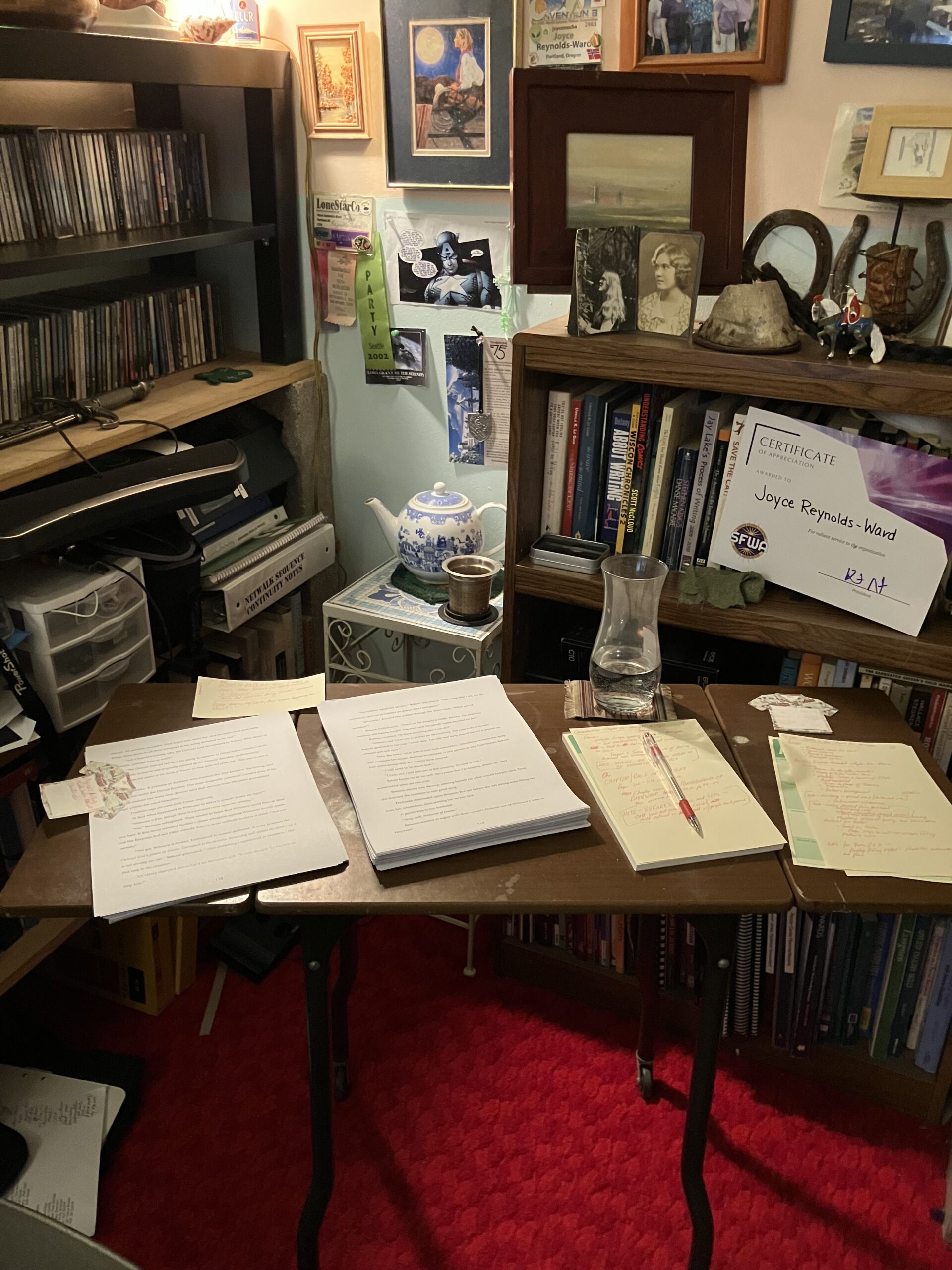
Other times it’s simply due to the nature of evolving ways of doing things in the face of a lot of life stuff going on. I’ve created detailed scene-by-scene outlines when I needed to be able to pick up the thread of what I’m working on quickly because I’m only able to draft in stolen moments. Other times, I’ve somewhat pantsed what I’ve been writing, going by instinct and feel—that tends to be what I do with shorter work, because my shorter work is often driven more by discovery writing. And still other times I have drafted a chapter-by-chapter synopsis that evolves as I work with the story.
In other words, I’ve been all over the place when it comes to how I plan my story.
And…sometimes a plan doesn’t work.
The current work in progress, Vision of Alliance, started out as a strict alternating-viewpoints by chapters story, because the characters were on two different continents in a high fantasy story where communications and travel take time. However, the further I went into the book, the more I didn’t like the notion, especially since I started alternating POVs within chapters. So I went back and decided that the order needed to be linear rather than shaped by chapters—and doing that required doing a bit of cutting and pasting to fit things in properly.
I’m not normally one to do a lot of cutting and pasting in my work these days. However, I noticed that once I was doing that with larger sections of text, I started doing it with paragraphs. Sentences. Within sentences.
Which is…interesting.
Now as I start planning the next book in the series, Vision of Chaos, I’m finding that what I really want to do is write an extended narrative about each main character’s situation at the beginning of the book. Alliance has a somewhat cliffhanger resolution. I’ve been trying to decide where to start Chaos—immediately after or not? I also drafted a solstice story that was a newsletter exclusive (publishing newsletter, not Substack newsletter) that for a while I thought might be the beginning of Chaos—but it starts six months after the end of Alliance.
I’m still not sure where to go with it. On the other hand, in writing the extended narrative about one main character, I realized that I had an explanation for the delay put forth in the solstice story. Alliance ends with a call to action, but…the extended narrative explains the delay in implementing that call to action. Other things have to be dealt with, and what gets sworn to as a necessary happening in the heat of emotion and reaction often faces the reality that to make it happen requires preparation and planning. Which is the scenario here because there are other issues that have to be dealt with before responding to the situation at the end of Alliance.
On the other hand, I think I’m working out what needs to happen in the story by writing this extended narrative. I’m going to be very interested in seeing what happens by the time I’ve finished writing four of these narratives, because I suspect I’ll have a lot of good plotting material already laid out for me.
Additionally, what I’ve also learned is that it’s not always a good idea to rush story development. I’ve had better results from letting a story seed sit around and mature than when I force it—that’s one reason why I don’t write well to prompts, unless it’s just a casual tossoff of a short story.
It’s also interesting because I usually write these sorts of side stories/notes/narratives during the original drafting, not in preparation for plotting the next story. Other things that are happening—the growth of secondary characters, the development of more worldbuilding touches, all things I can lift from these narratives to insert into the main story.
I’m finding this to be a fascinating process, and look forward to seeing what happens next. Will I do this with the next book in the trilogy? Hard to say. We’ll see when I get there—the same for the next book that is simmering for 2027.
But meanwhile, I’m enjoying the journey. And that is what matters.
