
Monthly Archives: December 2025

2025 was…a year

There are years that are great years, years that are bad years, and years that just…are years.

2025 was one of those. I spent a lot of time with the spouse working on a house to sell, and while it sold, eventually, the labor on the place ended up sucking out a lot of time and money. It slowed down my writing work and, as a result, I didn’t publish anything new this year, besides an extensive revision of Klone’s Stronghold into Klone’s Stronghold: Reeni, setting it up for potential sequels–that is, if anyone bothers to read or buy the damned books. There may be more of the same for 2026, but this time around I don’t anticipate it being quite as tiring or problematic.

In any case, part of the writing problem was that I had challenges getting into the world of Goddess’s Vision. That’s remedied now with Vision of Alliance on track for a late February/early March release, and starting preliminary work on Vision of Chaos. I plan to have all three books of this series finished and released in 2026. Additionally, I have other things going on for once, tied to my teaching history working with remedial writers and translating it into suggestions for writers looking to find ways to self-edit without resorting to software crammed full of generative AI.

I’ve also seen one of my ongoing projects with the Science Fiction and Fantasy Writers Association start to take off, thanks to a visionary and energetic new Communications Director at SFWA. The Heritage Author Republication Project is small but mighty, and 2026 will be dedicated to getting it even more developed and on a firmer foundation. Additionally, I am now one of the co-chairs of SFWA’s Independent Author Committee, and hope to see the Committee’s projects really take off and thrive.

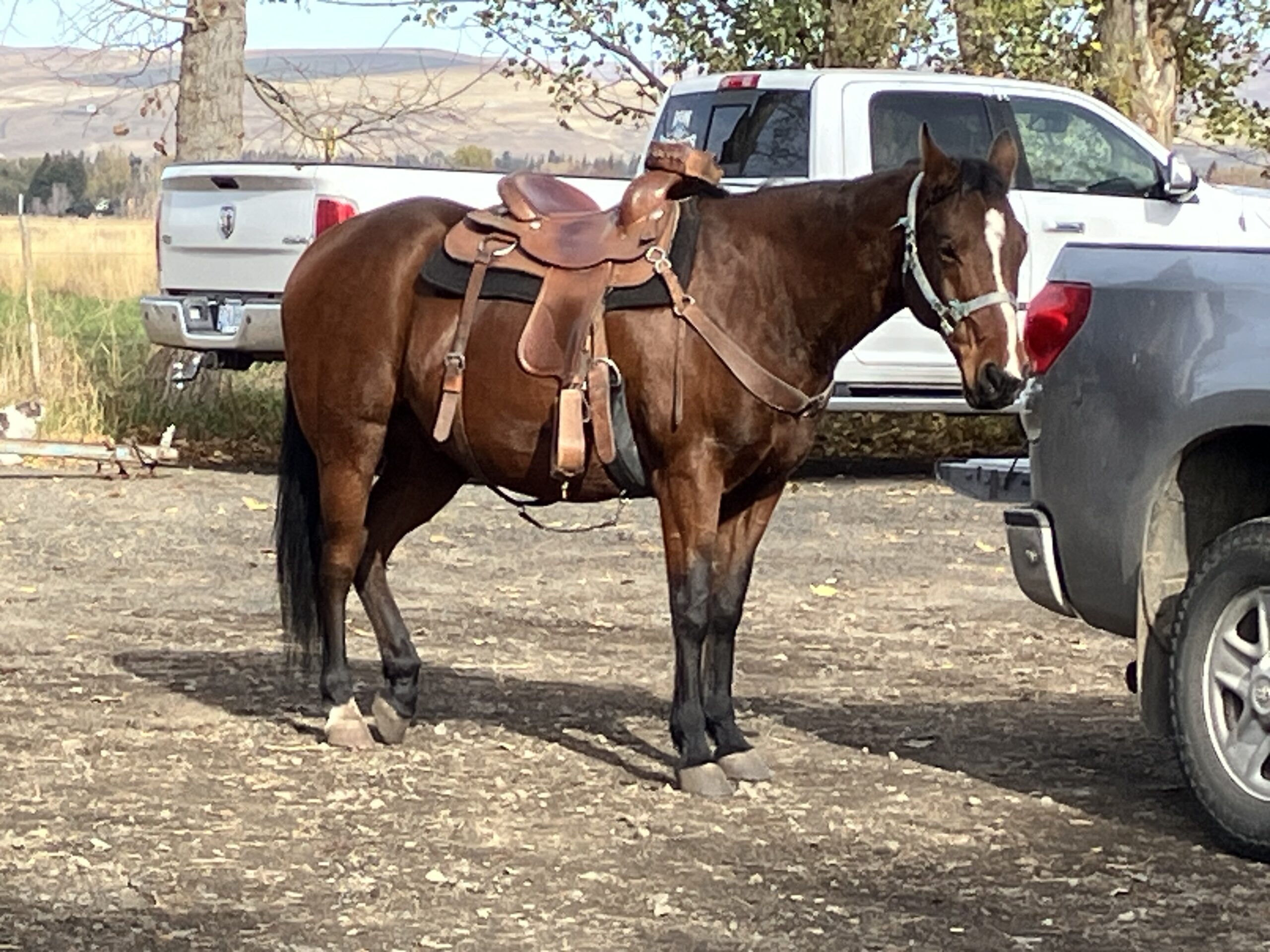
The other thing is that I turned sixty-eight this year. 2026 will be the year I turn the age that my mother died. That shouldn’t be a weight on my thoughts but nonetheless it is. All the same, I’m still active, going out to the forest to cut firewood with my husband and spending time riding and training Marker.

I’m down to one horse again. I realized that this was Mocha’s last year in February. She had developed a small abscess in her right fore in December of 2024, and while it resolved quickly, she never stopped limping. That winter was not very severe, but it was also hard on the old lady. She never really recovered from winter, despite my efforts to keep her warm and blanketed (she hated stalls in her last years). Her farrier had to kneel to put her hooves on his thigh when he trimmed her. The ranch owner saw her tripping and falling in the field for no obvious reason. Bone spurs kept popping out on that right knee in particular, and the vet just shook his head and said “no more winters” when he saw her for spring vaccinations. We made tentative plans for euthanasia in the fall, giving her one last good summer which–it was pretty good. She moved to her last field in June and was happiest with deer for companions, though she was also happy when Marker spent several weeks with her in July.

But her story came to an end on Labor Day, when I went to see her on my way to ride Marker, and discovered that she could barely walk. Several days before, she had resumed cantering, head high and proud–she was a horse who loved to run, and losing that ability was hard on her mentally. I could see it. Then the canter became a trot to my call, and finally a walk, and then that last day when it was all she could do to hobble to me for her last dose of painkiller. Evidence pointed to a possible neurological event, at least that’s what I think. Thankfully I had the full support of Vixen, Jeffrey, and Destiny Wecks as well as my husband in making the decision to put her down and bury her that night. Didn’t make it any easier, especially when Marker started screaming as the empty trailer came back from where she was buried.

Marker made huge gains this year under saddle and in hand. He carried Miss Rodeo Oregon 2025 as one of the horses in her 50 horse challenge, and went to his first horse show, where I learned that he could graze and scream at the same time. We worked hard on his canter–even though he’s a trotty gaited horse, he still needed a summer of focused training to not only work toward a smooth, rocking-horse canter but to pick up the proper inside lead on cue. But he also stepped up to the plate after Mocha’s death, becoming much more polite in ground handling and working more at liberty. While having a bit of spunk, he’s pretty much a good safe saddle horse for an elder rider. Which is what I need these days, along with that lovely little fox trot of his. He’s no Mocha but he’s definitely a good Marker. Not sure what we will do in 2026 but I have some notions in mind. He comes to call 99% of the time and is very human-oriented. A classic Foxtrotter characteristic, whether he’s purebred or not.

So that was 2025. Not gonna talk about political stuff because…these days I am focused on what I can do in my communities and that keeps me plenty busy. I’m hoping to do more writing and be more visible in 2026. We’ll see what the year brings.
Comments Off on 2025 was…a year

Filed under Uncategorized

A Change of Process

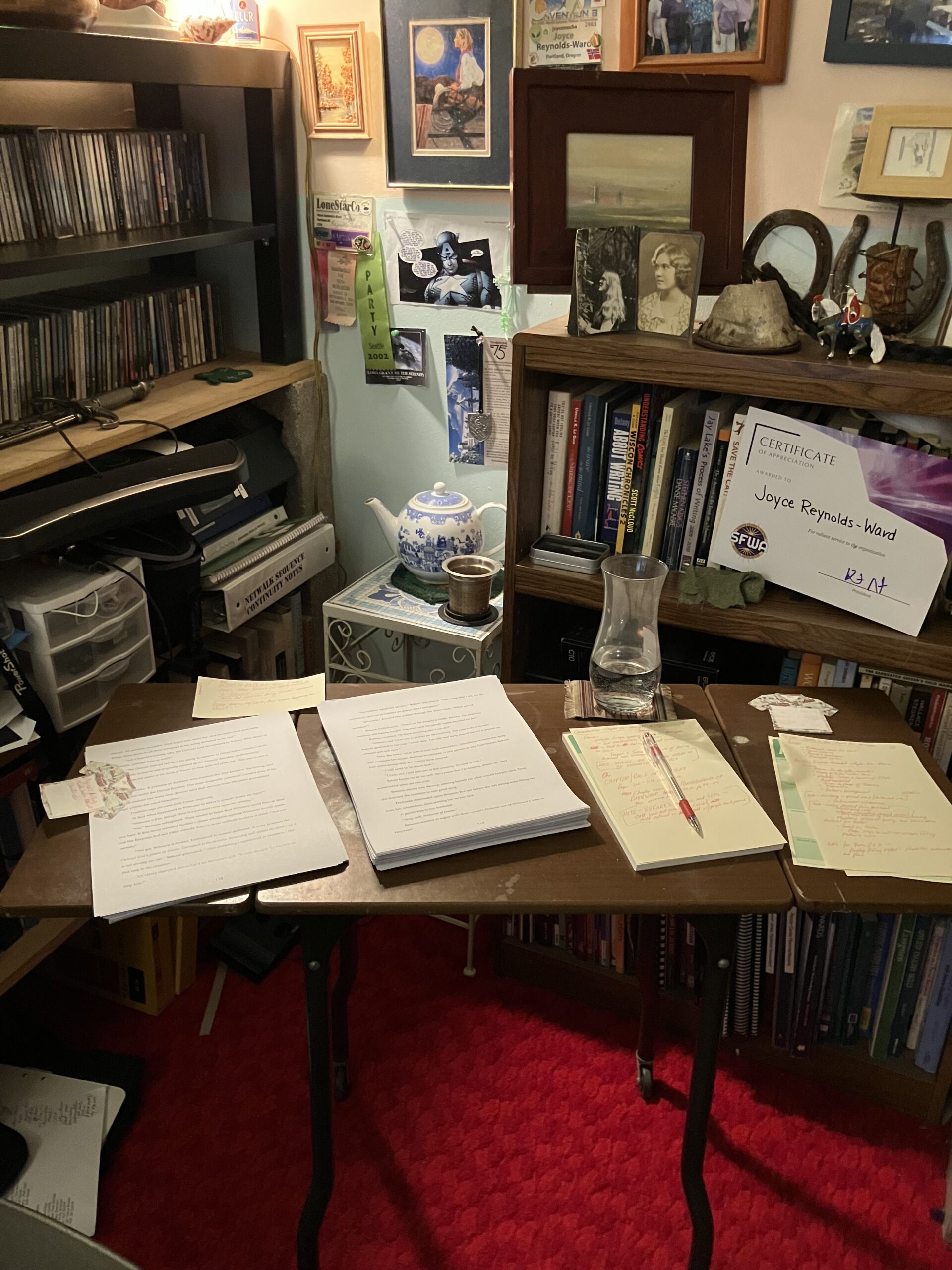
I’m one of the first out there to note that my writing processes have changed over time, and differ from book to book. While other people have an established process, mine varies over time and type of book. Some of that is due to the nature of the world I’m writing in—a book fitting into an established series will have already-formed characters who are facing new challenges in a world that’s already built and ready to roll.

(Well, sometimes that happens. And sometimes my characters leap into a world that is entirely new to them.)

Other times it’s simply due to the nature of evolving ways of doing things in the face of a lot of life stuff going on. I’ve created detailed scene-by-scene outlines when I needed to be able to pick up the thread of what I’m working on quickly because I’m only able to draft in stolen moments. Other times, I’ve somewhat pantsed what I’ve been writing, going by instinct and feel—that tends to be what I do with shorter work, because my shorter work is often driven more by discovery writing. And still other times I have drafted a chapter-by-chapter synopsis that evolves as I work with the story.

In other words, I’ve been all over the place when it comes to how I plan my story.

And…sometimes a plan doesn’t work.

The current work in progress, Vision of Alliance, started out as a strict alternating-viewpoints by chapters story, because the characters were on two different continents in a high fantasy story where communications and travel take time. However, the further I went into the book, the more I didn’t like the notion, especially since I started alternating POVs within chapters. So I went back and decided that the order needed to be linear rather than shaped by chapters—and doing that required doing a bit of cutting and pasting to fit things in properly.

I’m not normally one to do a lot of cutting and pasting in my work these days. However, I noticed that once I was doing that with larger sections of text, I started doing it with paragraphs. Sentences. Within sentences.

Which is…interesting.

Now as I start planning the next book in the series, Vision of Chaos, I’m finding that what I really want to do is write an extended narrative about each main character’s situation at the beginning of the book. Alliance has a somewhat cliffhanger resolution. I’ve been trying to decide where to start Chaos—immediately after or not? I also drafted a solstice story that was a newsletter exclusive (publishing newsletter, not Substack newsletter) that for a while I thought might be the beginning of Chaos—but it starts six months after the end of Alliance.

I’m still not sure where to go with it. On the other hand, in writing the extended narrative about one main character, I realized that I had an explanation for the delay put forth in the solstice story. Alliance ends with a call to action, but…the extended narrative explains the delay in implementing that call to action. Other things have to be dealt with, and what gets sworn to as a necessary happening in the heat of emotion and reaction often faces the reality that to make it happen requires preparation and planning. Which is the scenario here because there are other issues that have to be dealt with before responding to the situation at the end of Alliance.

On the other hand, I think I’m working out what needs to happen in the story by writing this extended narrative. I’m going to be very interested in seeing what happens by the time I’ve finished writing four of these narratives, because I suspect I’ll have a lot of good plotting material already laid out for me.

Additionally, what I’ve also learned is that it’s not always a good idea to rush story development. I’ve had better results from letting a story seed sit around and mature than when I force it—that’s one reason why I don’t write well to prompts, unless it’s just a casual tossoff of a short story.

It’s also interesting because I usually write these sorts of side stories/notes/narratives during the original drafting, not in preparation for plotting the next story. Other things that are happening—the growth of secondary characters, the development of more worldbuilding touches, all things I can lift from these narratives to insert into the main story.

I’m finding this to be a fascinating process, and look forward to seeing what happens next. Will I do this with the next book in the trilogy? Hard to say. We’ll see when I get there—the same for the next book that is simmering for 2027.

But meanwhile, I’m enjoying the journey. And that is what matters.

Comments Off on A Change of Process

Filed under Uncategorized

SARAH STEPHENS IS NOT YOUR AI GRANDMA

Some thoughts about digital personalities in my work

(self-indulgent blather about my take on artificial digital beings, as I’ve written them)

I’ve been watching the latest AI developments with a somewhat…oh, what word do I want? Not jaded, not cynical, but definitely somewhere in between. Especially when I start reading about “AI Grandmas” and the use of that tech to speak to long-dead relatives. Oh, it’s presented with that same amber glossiness that seems to dominate the worlds of AI visual creations. But…we’re already seeing some of the dark side of these AI creations with reports of self-harm and worse coming from AI “personalities.”

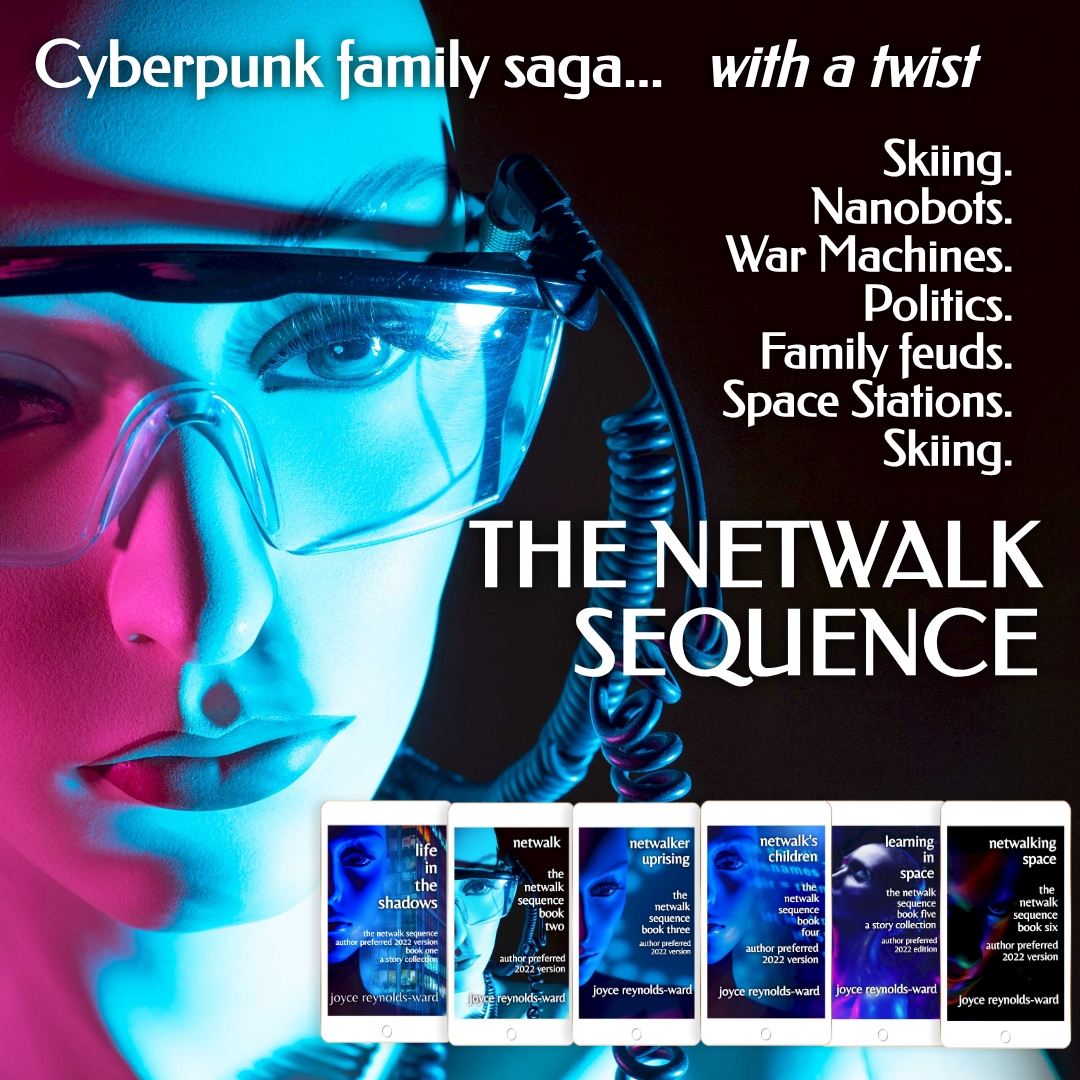
One reason for my attitude is that the creation of self-aware digital personalities is something I’ve somewhat explored in my work, most notably the Netwalk Sequence series and the Martiniere Family Multiverse Saga. In both cases, the tech I explore is already somewhat different from what we are seeing. I don’t go into the nuts and bolts of just how that self-awareness ends up happening (well, a little bit in the Martinieres). But nonetheless, I think this dynamic of what that really looks like is something very much overlooked in the current hype around “preserving the memories of your loved ones” in order to recreate them in a digital simulation. I can oh-so-easily see how it could turn bad.

What happens if AI Grandma is toxic? Or if AI Grandma develops sufficient self-awareness to start meddling in the affairs of her descendants? It’s entirely possible. And while AI Grandma might not have the ability with current tech to really muck up her descendants’ banking and financial history…there’s still a lot of damage she can do to living beings.

The Netwalk Sequence was my first exploration of just what the problems with a separate digital personality creation could end up being. I started building the Netwalk Sequence world back in the ‘90s, when digital personality uploads were somewhat the fashion in fiction and in theory.

My base assumption was that digital personalities could completely upload to the internet upon their death. In that world it’s entirely possible to be a complete personality online, with full body immersion, using the mechanism of a highly sophisticated wireless communication chip implant called Netwalk. Uploading came later, in the midst of a dramatic political struggle where an older leader—Sarah Stephens—uploaded upon her death and began to stalk and attack her opponents. The new development was called Netwalk, and the uploaded personalities called Netwalkers.

A restraint that I created in the Netwalk universe was that Netwalkers would go insane and turn predatory on living beings if completely cut off from sensory inputs. They would attack alive users of Netwalk in order to gain sensory exposures and recharge themselves—as well as fulfilling agendas and settling resentments that hadn’t been dealt with in life. In some cases this would end up as possession of the living being by the Netwalker. As a result, with the exception of a handful of rogues, Netwalkers ended up being tied to a living host, most specifically that host’s Netwalk chip. In the Sequence, we see is how this plays out within one powerful family, the creators and controllers of this technology. With some other dynamics thrown in as well—the control of a war machine of unknown origin which has some influence on the development of the original Netwalk, plus intensely weird family history that involves a lot of infighting and struggles over who controls what.

There’s no grudge like a family grudge, shall we say?

In the Martiniere Multiverse, I postulate something closer to our current concept of the “AI Grandma,” where videos and recordings lead to the creation of digital thought clones. Thought clone appearances in the Martiniere Multiverse aren’t constrained to computers and devices, however, and they can hop universes. This is somewhat connected to a magical Fae origin which is tied to a computer worm that can also skip through assorted multiverses.

The Martiniere digital thought clones (digis for short) differ from Netwalker personality uploads at death in that they are specifically digital constructs of a once-living personality, and only become activated upon specific actions by a living person who is keyed into the algorithm. The digis are fully aware that they are digital constructs and are not the uploaded personality of the dead person they’re modeled after.

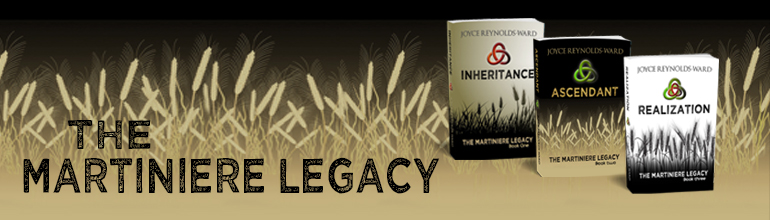
Digis don’t appear in every Martiniere book. To follow their development chronologically in series order, start with The Enduring Legacy, the fourth book of the Martiniere Legacy series. We see Gabriel Martiniere’s first awareness of digis shortly before his death, when he ties the appearance of a dangerously destructive computer worm to specific holes in not just his memory but the memories of his closest family. Gabe takes the first steps to establish the bounds of his digi, with a specific activation algorithm tied to certain family members.

More details about digis and their creations happen in two of the Martiniere Legacy standalones, The Heritage of Michael Martiniere and Justine Fixes Everything: Reflections on Mortality. Heritage shows Gabe’s activation; Justine goes into further complications. However, the most details and the most explicit multiversal version appears in the three books of The Cost of Power: Return, Crucible, and Redemption.

Like Netwalkers, digis are capable of possessing living beings and bending them to their will. There are malign digis and beneficial digis. We only see them in the context of one, powerful family because, in both cases, the artificial entities serve as chess pieces in ongoing family battles. They are obstacles that need to be navigated and overcome by the protagonists.

(Sarah Stephens and Philip Martiniere would probably strongly disagree with me but—nothing says that they are pawns.)

Back in real life, Netwalk is probably not at all feasible, though digis…may be. Current technology doesn’t allow for digis to function the way I wrote them in the Martinieres, but some of the same issues raised by both Netwalk and digis still exist. The news has multiple examples of people being influenced by AI interactions to do harm, whether to themselves or others. Or of people who develop a strong emotional attachment to artificial beings to the detriment of their attachments to living beings.

Rather than the apocalyptic stuff I postulated in the Netwalk and Martiniere books, that’s the real harm in uncritical adoption of the creation of artificial beings. At what point do we slip from a clear awareness that “this is a creation; this is not real” to uncritical acceptance of these creations as real beings?

What happens if we start treating these AI creations as something above and beyond an artificial construct?

What rights will they have as opposed to living humans? Or lack of rights?

What happens if they turn malign, either due to the manner in which they are constructed or due to abusive treatment from living humans? Then what?

All food for thought.

Meanwhile, the artificial beings I created in my own worlds are definitely not your happy-happy AI Grandmas. And at times, I wonder if those imperfect visions of mine may end up reflecting an actual reality.

We shall see.

Comments Off on SARAH STEPHENS IS NOT YOUR AI GRANDMA

Filed under Uncategorized

Winter Ramblings with Horse

So far it’s been an open winter. We’ve had some snow, some frozen ground, but now things have warmed up a little bit, thanks to a series of storms brought in by an atmospheric river. We don’t get it nearly as bad here as the people on the West side of the Cascades will, but all the same…it should be snowing here, and it isn’t.

It’s somewhat of an adjustment to not be worrying about a hard-keeping horse in the winter after twenty years with a hard keeper. Even in an open winter like this, I had to keep an eye on Mocha to make sure she wasn’t losing weight, and she would have required a blanket or rain sheet on some of our stormy days so that she wasn’t burning calories keeping warm. But now, with Marker, it’s…simply not an issue. He went from a dry lot with hay nets (to keep him from wasting the hay. Boy is a very messy eater) to the big field and…has gained a little bit of weight. He’s back to the next-to-the last hole on his rear cinch, and even then it’s snug. Might have to punch another hole in it to fit.

But it feels weird to not be thinking about the blanket dance.

Marker had to take a little bit of a break because he strained a fetlock (we think) in his left hind. He recovered from that quickly. But I started poking around, and thought the root of the problem might be higher up, too, so I started putting liniment on his gaskins. Which he likes but…he also has shown a taste for the liniment itself. I discovered this the other day when he tongued open the cap and was licking the bottle. Spilled some today and he was licking it off of the truck tailgate. It has juniperberry oil in it so I suppose that’s what the attraction is.

In any case, we’re getting back into full work, riding in the field because it has the best footing. I haven’t been taking him on the roads because the type of storms we’ve been having reduces visibility, and even with a bright purple quartersheet I’m not sure we can always be seen. At least it’s not the driving, steady, pounding rain of Western Oregon. But intermittent showers can still leave me cold and wet at the end of a ride! Especially on a windy, blustery day.

On the other hand, it’s no worse and actually better than some of those stormy days I spent skiing at Timberline. I use the same type of base layers out riding that I used when skiing–synthetic, yes, with the ability to wick moisture away from my skin. In some cases, those base layers are the same ones I used in those ski days. Couple that with some of my old ski sweaters and an old hardshell parka, and it’s reasonably comfortable, even in the coldest weather. Oh, and insulated knee-high snow boots as well. I pushed wearing my regular boots as long as possible, then realized that I felt colder because wind could blow up the cuffs of my pants. Pulled on the insulated snow boots and did that ever make a difference.

The kind of riding I’m doing now has changed. Summer was a focus on schooling and refining skills–for both of us. I hadn’t realized until this summer just how much I had modified my riding to accommodate Mocha’s needs, then switched to young horse schooling with Marker. I’ve been doing light weight work to deal with tight back muscles, and that’s also helped as well. But I needed to work on bringing my legs back, which…those tight muscles had been impairing. One of those sneaky impairments that creeps up on you with age, I suppose.

In any case, Marker and I spent a lot of time in the arena this summer, and it’s pretty much paid off. He hits his canter leads darn near 99% of the time. He’s much more confident and strong when cantering, too. I’ve found that some horses really do just need to have a lot of time cantering to be strong enough under saddle to be relaxed about it, and given that a lot of gaited horses often struggle with cantering under saddle, we had to spend a bit of time conditioning. And it’s not consistent yet. I have a lovely, balanced, rocking-horse left lead canter. Right lead? He still wants to rush and speed up. More work and conditioning is required–rushing is a sign of tension. It’ll happen over time.

But winter work is different from the intensive schooling of summer. Oh, I do a little bit of schooling. Right now I’m working on developing seat cues, and he’s picking it up pretty well. We’re doing small serpentines and circles where the primary cues are the weight of the outside seatbone and the turn of my head, and that’s coming along nicely. It’s interesting, because Mocha was the cattier of the two horses–up to her last days, she was capable of executing a sharp 180 turn off of her haunches tighter and faster than most of the other horses (it was one of her evasions when another horse started making her move her feet). However, she wasn’t as responsive to seat cueing as Marker is so far–most of the time, I had to tune her up before I could casually weight a seatbone, turn my head, and have her respond. Marker? He has picked it up quickly. No tuning required. I can get that response with a weighted seatbone and head turn early in the ride, rather than later, after starting with heavier cues, then softening to the lighter cues. It’ll be interesting to see how light I can make him on a consistent basis.

I also invested in some inexpensive oversized stirrups because I didn’t like the way my regular stirrups work with the winter boots. Additionally, I had this sneaking hunch that they were making it more difficult to get on from the ground. Well, I’ve only had two sessions with the new stirrups but my theory has been confirmed–it is easier to get on with the oversized stirrups (just a hair wider), and they work a lot better with the winter boots. Plus they hang better from the fenders than the originals did. The biggest drawback is that they are plastic, so I wonder how durable they’ll be in cold weather. Oh well. Gives me data should I want to upgrade to more expensive ones.

But, mainly, winter riding is just more about keeping up the fitness for both of us. A slower, more relaxed riding time. A chance to work on our connection with each other. A throwback to the days of my youth, only with a better quality of horse.

If I had been told years ago that I would still be throwing a leg over the back of a good horse at age sixty-eight, I might not have believed it then. Now? Well, I’m gonna do my darnedest to keep going as long as I can.

And in order to do that, I need to drag my rear out to the field and ride the horse in all seasons.

Comments Off on Winter Ramblings with Horse

Filed under Uncategorized